

Película · 2008
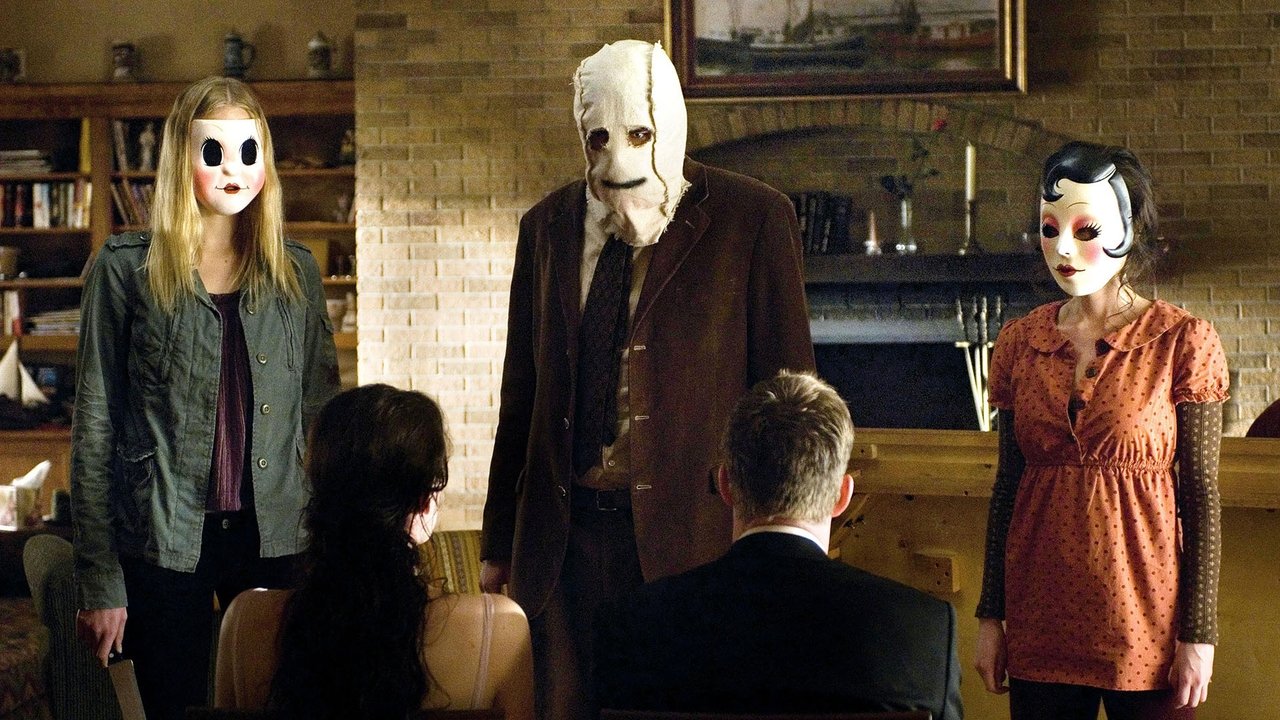
Los extraños
Dirección: Bryan Bertino
Kristen McKay y James Hoyt habían decidido pasar una noche especial en la aislada segunda residencia de la familia Hoyt. Al regresar a casa después de asistir a la boda de una amiga, el mundo de la pareja se derrumba cuando alguien llama a la puerta a las 4 de la mañana y pregunta: "¿Está Tamara?"
Reparto

Liv Tyler
Kristen McKay

Scott Speedman
James Hoyt

Gemma Ward
Dollface

Kip Weeks
Man in the Mask

Laura Margolis
Pin-Up Girl

Glenn Howerton
Mike
Alex Fisher
Mormon Boy #1
Peter Clayton-Luce
Mormon Boy #2

Nick Barghini
Joe - Lumberjack (uncredited)
Shawn McClellan
Shawn the Bartender (uncredited)
Jordan Orr
Jordan - 911 Caller (voice) (uncredited)
Dónde ver
Suscripción
 Movistar Plus+ Ficción Total
 SkyShowtime
 Sky Showtime Amazon Channel
Alquiler
 Apple TV Store
 Amazon Video
Compra
Apple TV StoreAmazon VideoFicha técnica
- Título original
- The Strangers
- Idiomas
- English
- Países
- United States of America
- Productoras
- Intrepid Pictures| Rogue Pictures| Vertigo Entertainment| Mandate Pictures
- Presupuesto
- USD 9,000,000
- Recaudación
- USD 83,051,676
Cifras en dólares, según TMDb.
Críticas
(CASTELLANO) Una casa aislada, una pareja emocionalmente rota y unas figuras que aparecen donde no deberían: con muy poco, la película construye una sensación de amenaza bastante eficaz. Lo que más me funciona es precisamente esa sencillez. Bryan Bertino no necesita explicar demasiado ni llenar la pantalla de sangre para generar inquietud; le basta con hacer que el espacio deje de sentirse seguro. La relación entre Kristen y James también ayuda. No son dos personajes entrando felices en una noche cualquiera, sino una pareja que ya llega tocada por algo previo. Esa incomodidad íntima hace que el peligro exterior tenga más peso, porque la casa no empieza siendo un refugio perfecto. Hay distancia, silencio y una fragilidad emocional que el terror aprovecha bien. Liv Tyler transmite muy bien esa vulnerabilidad. Su interpretación no depende de grandes discursos ni de heroicidades, sino de miedo, desconcierto y agotamiento. Scott Speedman funciona desde un registro más contenido, y juntos consiguen que la película tenga un tono bastante humano incluso cuando la situación se vuelve cada vez más extrema. Lo mejor está en cómo Bertino utiliza el espacio. Pasillos, ventanas, puertas y rincones pasan a tener una presencia propia. La cámara muchas veces deja aire detrás de los personajes, y ese espacio vacío se convierte en amenaza porque uno empieza a buscar constantemente algo en el fondo. Hay escenas donde casi no ocurre nada y, aun así, funcionan por puro encuadre y espera. También me gusta el uso del silencio. La película no intenta sobresaltarte cada treinta segundos. Hay ruidos, interrupciones y golpes, pero buena parte de la tensión nace de no saber si algo va a aparecer o no. Ese ritmo lento puede desesperar a quien busque acción continua, pero aquí ayuda a crear una sensación de acoso muy física. Las máscaras son otro acierto. No necesitan una mitología complicada ni un diseño recargado. Son simples, reconocibles y suficientemente inexpresivas como para resultar inquietantes. La película entiende que, cuanto menos sabes de quienes están al otro lado, más fácil es proyectar sobre ellos cualquier miedo. La simplicidad es también su principal límite. El argumento es muy reducido y depende casi por completo de mantener la tensión dentro de un espacio cerrado. Cuando uno se acostumbra al mecanismo, algunas repeticiones empiezan a notarse y ciertos comportamientos de los personajes pueden resultar frustrantes. Hay decisiones que parecen existir porque el guion necesita prolongar la amenaza. Tampoco hay una gran profundidad psicológica. La película funciona más como experiencia que como relato complejo. Si se intenta buscar una explicación elaborada para todo, probablemente decepcione. Su fuerza está más en lo arbitrario, en la idea de que una situación cotidiana pueda convertirse en algo incomprensible y violento sin que exista una lógica reconfortante detrás. Vista tantos años después, sigue teniendo algo muy efectivo: no parece obsesionada con demostrar nada. No intenta construir una franquicia en cada escena, ni justificarlo todo, ni convertir a sus protagonistas en héroes de acción. Se limita a generar miedo con una casa, unas máscaras, una pareja vulnerable y una amenaza que se mueve alrededor de ellos. Los extraños no me parece una obra maestra del terror, pero sí un home invasion bastante sólido, seco y con momentos de verdadera tensión. Tiene defectos de lógica, algunos comportamientos discutibles y una historia mínima, pero sabe crear sensación de indefensión y mantenerla durante buena parte del metraje. Y después de tantos años, eso sigue funcionando bastante bien. (ENGLISH) An isolated house, an emotionally fractured couple and figures appearing where they should not: with very little, the film creates a remarkably effective sense of threat. What works best for me is precisely that simplicity. Bryan Bertino does not need to explain too much or fill the screen with blood to create unease; he only needs to make the space stop feeling safe. The relationship between Kristen and James also helps. They are not two happy people walking into an ordinary night, but a couple already carrying emotional damage. That private discomfort gives the external danger more weight because the house never begins as a perfect refuge. There is distance, silence and vulnerability that the horror uses well. Liv Tyler conveys that vulnerability very effectively. Her performance does not depend on speeches or heroics, but on fear, confusion and exhaustion. Scott Speedman works in a more restrained register, and together they keep the film human even as the situation becomes increasingly extreme. The strongest element is Bertino's use of space. Hallways, windows, doors and corners take on a presence of their own. The camera often leaves empty space behind the characters, and that emptiness becomes threatening because you start constantly scanning the background. There are scenes where almost nothing happens and yet they work through framing and waiting alone. I also like the use of silence. The movie does not try to startle you every thirty seconds. There are noises, interruptions and sudden impacts, but much of the tension comes from not knowing whether anything is going to appear at all. That slow rhythm may frustrate viewers looking for constant action, but here it helps create a very physical sense of being hunted. The masks are another strong choice. They do not need complicated mythology or elaborate design. They are simple, recognizable and expressionless enough to be disturbing. The film understands that the less you know about the people behind them, the easier it is to project your own fears onto them. That simplicity is also the main limitation. The plot is very small and depends almost entirely on sustaining tension inside a confined space. Once you become familiar with the mechanism, some repetition starts to show and certain character decisions can become frustrating. There are moments that seem to exist because the screenplay needs to prolong the threat. There is not much psychological depth either. The film works more as an experience than as a complex narrative. If you go looking for an elaborate explanation for everything, it will probably disappoint. Its strength lies more in arbitrariness, in the idea that an ordinary situation can become incomprehensible and violent without offering a comforting logic. Seen again after so many years, it still has something effective: it does not seem desperate to prove anything. It does not try to build a franchise in every scene, explain every detail or turn its leads into action heroes. It simply generates fear with a house, masks, a vulnerable couple and a threat moving around them. The Strangers is not a horror masterpiece for me, but it is a solid, dry home-invasion film with moments of genuine tension. It has logical flaws, questionable character behavior and a minimal story, but it knows how to create helplessness and sustain it for much of the running time. Even after all these years, that still works well.
Recomendadas

El asesino de Rosemary
1981 · Película

Nosotros
2019 · Película
Scream 4
2011 · Película

Los Extraños: Capítulo 3
2026 · Película

El Coleccionista
2009 · Película

La masacre de Texas
2003 · Película
Halloween
1978 · Película

Trick
2019 · Película

La ciudad que teme al ocaso
2014 · Película

Angustia
1987 · Película
Scream 6
2023 · Película

La Casa del Terror
2019 · Película

Cacería Sangrienta
2024 · Película

Viernes 13, Parte VI: Jason vive
1986 · Película
Similares

Circus Kane
2017 · Película

Scream: Grita antes de morir
1996 · Película

Scream 2: Grita y vuelve a Gritar
1997 · Película

Scream 3: La Máscara de la Muerte
2000 · Película

Meathook Massacre
2015 · Película

Scream (Grita)
2022 · Película

Todavía sé lo que hicieron el verano pasado
1998 · Película

I Filmed Your Death
— · Película

The Final Terror
1983 · Película

Siempre sabré lo que hicieron el verano pasado
2006 · Película

Dr. Cyclops
1940 · Película

Sé lo que hicieron el verano pasado
1997 · Película

Sette orchidee macchiate di rosso
1972 · Película

鬼婆
1964 · Película