
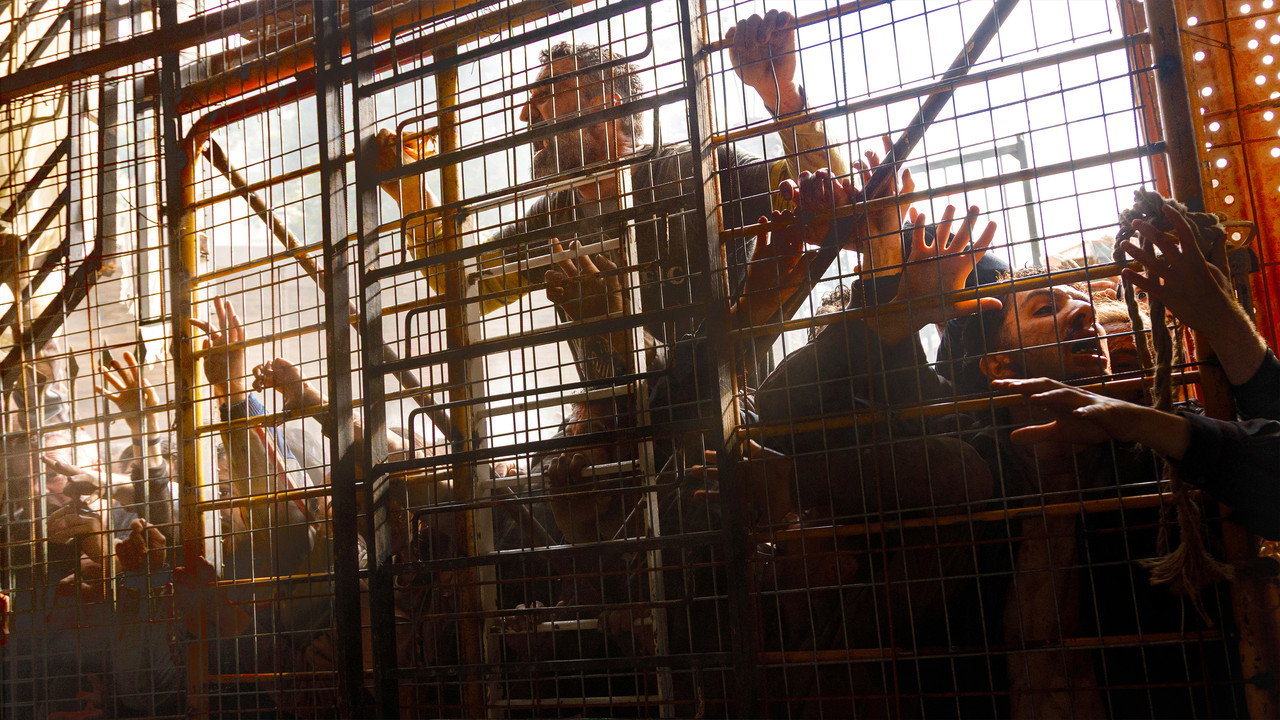
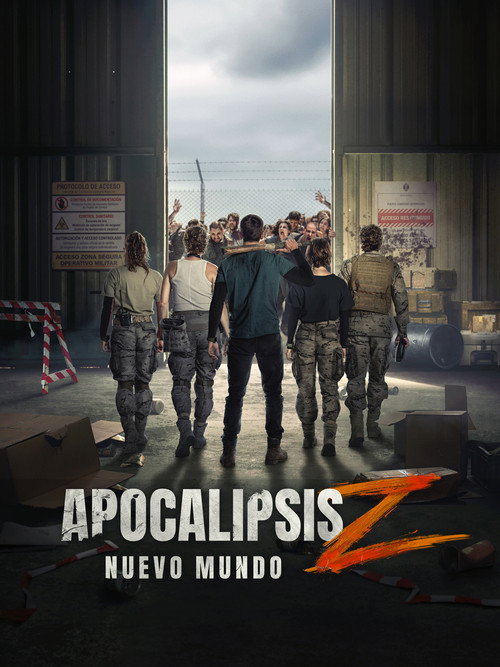
Secuela de 'Apocalipsis Z: El principio del fin'. La historia nos traslada a unas Islas Canarias que se han convertido en el último refugio de Europa tras el brote del virus TSJ. Cuando una misión especial parte hacia la península en busca de suministros vitales, Roberto (Carlos Alcaide) se une al equipo con dudosas intenciones. La peligrosa operación se transforma en una carrera desesperada por la supervivencia, y Roberto y sus compañeros se encontrarán entre hordas de infectados y lealtades divididas. Entonces surge la eterna pregunta: ¿salvarse uno mismo o arriesgarlo todo para salvar lo poco que queda de humanidad?
Reparto

Carlos Alcaide
Roberto

Julia Martínez
Marina
José María Yázpik
Pritchenko

Mónica López
Castro

Tamara Casellas
Comillas

Berta Vázquez
Lucía

Santiago Vaca Narvaja
Core

Mario Mayo
Comandante De Luna
Javier Godino
González-Escalona

Pedro Hernández
Guzmán
Axel Medrano
Manuel
Kevin Ramos
Rodríguez

Ujin Moreno
Tae
Albert Suárez
Cedeño
Dónde ver
Suscripción
 Amazon Prime Video
 Amazon Prime Video with Ads
Ficha técnica
- Idiomas
- Español
- Países
- Spain
- Productoras
- Nostromo Pictures
Críticas
(CASTELLANO) Hay algo especialmente eficaz en ver lugares que reconoces convertidos en espacios de evacuación, combate y supervivencia. Apocalipsis Z: Nuevo Mundo aprovecha eso bastante bien: Madrid no es un fondo genérico, sino una ciudad transformada en territorio hostil, y conocer esos lugares hace que la sensación entre de otra manera. La película cambia claramente de escala respecto a la anterior. Aquí hay más acción, más movimiento, más grupos enfrentados y un colapso mucho más amplio. Ya no estamos únicamente siguiendo a alguien que intenta sobrevivir como puede, sino observando cómo distintas estructuras intentan organizarse cuando casi todo alrededor se ha venido abajo. Ese cambio tiene cosas muy buenas. Las secuencias de evacuación y combate tienen energía, los infectados aparecen en grupos mayores y hay momentos que recuerdan inevitablemente a World War Z, no porque sean idénticos, sino por esa sensación de masa, urgencia y resistencia humana ante algo que parece imposible de contener. A mí esas escenas me funcionan porque el cine de zombis gana muchísimo cuando consigue transmitir que no estamos viendo solo una persecución individual, sino un mundo entero reorganizándose alrededor de la supervivencia. Ahí la película encuentra una épica que la primera apenas necesitaba. También ayuda que Madrid esté tan presente. Reconocer Cuatro Vientos y otros espacios de la ciudad hace que el apocalipsis resulte menos abstracto. Una cosa es ver una urbe lejana destruida y otra ver lugares por los que has pasado muchas veces convertidos en puntos de evacuación o resistencia. La parte militar está bastante bien resuelta. Hay una sensación de improvisación, cansancio y recursos limitados. Los supervivientes no esperan una solución milagrosa: intentan conservar pequeños espacios de orden dentro de un desastre enorme. Donde tengo más problemas es en la continuidad con la primera película. El cambio de foco resulta brusco y hay decisiones respecto a personajes anteriores que me cuesta aceptar con naturalidad. No porque una secuela tenga obligación de seguir exactamente al mismo protagonista, sino porque cuando has construido un vínculo fuerte con alguien, apartarlo de esa manera puede sentirse más como una decisión externa que como una evolución orgánica. La película intenta compensarlo ampliando el universo. En lugar de centrarse en una sola historia personal, apuesta por algo más coral: quién controla los recursos, cómo se mantiene una estructura de mando, hasta dónde llega la solidaridad y qué queda de las instituciones cuando la sociedad empieza a desaparecer. Ese enfoque me interesa, aunque los personajes nuevos no siempre tienen tiempo para adquirir la misma fuerza. La acción avanza deprisa y algunas relaciones quedan algo esquemáticas. Los infectados siguen siendo efectivos porque se mueven con agresividad y convierten cualquier error en peligro inmediato. La amenaza tiene velocidad y obliga a que las escenas de acción mantengan un ritmo alto. Técnicamente también hay más ambición. Se nota una producción mayor, más destrucción y una planificación que busca imágenes grandes sin perder del todo ese sabor español de la primera. Y precisamente por eso me acordé varias veces de World War Z. Lo que más me gusta de ese tipo de historias no son solamente los zombis, sino ver a gente que decide resistir, organizarse y ayudar a otros cuando lo más fácil sería pensar únicamente en salvarse. Ahí está también lo mejor de Nuevo Mundo. Cuando se concentra en la resistencia colectiva y en la idea de que todavía puede existir esperanza dentro de una ciudad arrasada, gana una dimensión emocional que va más allá de las persecuciones. Ese sentimiento de que aún queda alguien al otro lado y de que todavía puede organizarse una respuesta me funciona muchísimo. No todo tiene la misma fuerza. Hay tópicos conocidos del género, algunos personajes podrían estar más desarrollados y el salto respecto a la primera parte puede resultar demasiado brusco. Además, la comparación con referentes mayores es inevitable y no siempre sale beneficiada. Pero como película de acción zombi es bastante eficaz. Tiene ritmo, escenas de escala considerable, infectados peligrosos y una utilización de Madrid que para mí suma muchísimo. No pretende reinventar el género, pero sí ampliar claramente el mundo que había planteado la primera entrega. Apocalipsis Z: Nuevo Mundo me interesa menos por el terror que por la sensación de resistencia. Me gusta cuando estas historias dejan de preguntarse únicamente cómo escapar y empiezan a preguntarse cómo reunirse, cómo reconstruir y cómo hacer saber a quienes siguen escondidos que todavía no están solos. Ahí es donde esta secuela encuentra su mejor razón para existir. (ENGLISH) There is something especially effective about seeing places you recognize transformed into spaces of evacuation, combat and survival. Apocalypse Z: New World uses that very well: Madrid is not a generic backdrop but a city turned into hostile territory, and knowing those places makes the feeling hit differently. The film clearly increases the scale compared with the previous entry. There is more action, more movement, more groups colliding and a much broader collapse. We are no longer only following someone trying to survive however they can, but watching different structures attempt to organize themselves after almost everything around them has fallen apart. That change brings several strengths. The evacuation and combat sequences have energy, the infected appear in larger groups and some moments inevitably recall World War Z, not because they are identical, but because of that feeling of mass panic, urgency and human resistance against something that seems impossible to contain. Those scenes work for me because zombie cinema becomes much more powerful when it conveys that we are not watching only one individual chase, but an entire world reorganizing itself around survival. That is where the film finds an epic dimension the first entry barely needed. Madrid being so present also helps. Recognizing Cuatro Vientos and other parts of the city makes the apocalypse feel less abstract. It is one thing to watch a distant city collapse and another to see places you know transformed into evacuation or resistance points. The military side is handled quite well. There is a sense of improvisation, exhaustion and limited resources. The survivors are not waiting for a miraculous solution; they are trying to preserve small pockets of order inside an enormous disaster. My main problem is continuity with the first film. The shift in focus feels abrupt, and some decisions involving earlier characters are difficult for me to accept naturally. Not because a sequel has to follow exactly the same protagonist, but because once a strong bond has been built, moving away from that person can feel more like an external decision than an organic evolution. The film tries to compensate by expanding the universe. Instead of centering on one personal story, it becomes more ensemble-driven: who controls resources, how a chain of command survives, how far solidarity reaches and what remains of institutions when society begins to disappear. That approach interests me, although the new characters do not always have enough time to acquire the same strength. The action moves quickly and some relationships remain a little schematic. The infected remain effective because they move aggressively and turn every mistake into immediate danger. The threat has speed, forcing the action sequences to maintain a high tempo. Technically, there is more ambition as well. The production feels larger, with more destruction and staging designed for bigger images without completely losing the Spanish flavor that distinguished the first film. That is precisely why I thought several times of World War Z. What I like most in this kind of story is not only the zombies, but watching people decide to resist, organize themselves and help others when the easiest option would be to think only about saving themselves. That is also where New World is at its best. When it focuses on collective resistance and the idea that hope can still exist inside a devastated city, the film gains an emotional dimension beyond pursuit and action. That feeling that someone may still be out there and that a response can still be organized works very well for me. Not everything has the same strength. There are familiar genre clichés, some characters could be more developed and the jump from the first film can feel too abrupt. Comparisons with larger reference points are also inevitable and do not always favor it. But as a zombie action film, it is quite effective. It has pace, large-scale sequences, dangerous infected and a use of Madrid that adds a great deal for me. It does not try to reinvent the genre, but it clearly broadens the world established by the first entry. Apocalypse Z: New World interests me less for horror than for the feeling of resistance. I like these stories most when they stop asking only how to escape and begin asking how to regroup, rebuild and let those still hiding know that they are not alone. That is where this sequel finds its strongest reason to exist.
Recomendadas

12 Horas para sobrevivir: El Año de la Elección
2016 · Película

Resident Evil: El Huésped Maldito
2002 · Película

Resident Evil: Apocalipsis
2004 · Película

La bala de Dios
2023 · Película

La Carrera Mortal: El sobreviviente
1987 · Película

Maze Runner: Prueba de fuego
2015 · Película

RoboCop 2
1990 · Película

Equilibrium
2002 · Película

Spectral
2016 · Película

Sniper: La Ultima Resistencia
2025 · Película

La Cacería
2020 · Película

El sobreviviente
2025 · Película

Niños del hombre
2006 · Película

Escape de Nueva York
1981 · Película
Similares

Das Mädchen von Hongkong
1973 · Película

ರಾಜಕುಮಾರ
2017 · Película

Indiana Jones 4: El Reino de la Calavera de Cristal
2008 · Película

Doce del patíbulo
1967 · Película

La caza del Octubre rojo
1990 · Película

Godzilla 2
1955 · Película

King Kong contra Godzilla
1962 · Película

La Momia: La tumba del emperador dragón
2008 · Película

Tirez sur le pianiste
1960 · Película
एनिमल ३
— · Película
The President Is Missing
— · Película

Pored tebe
2023 · Película

13 Guerreros
1999 · Película

Bunny Lake ha desaparecido
1965 · Película