
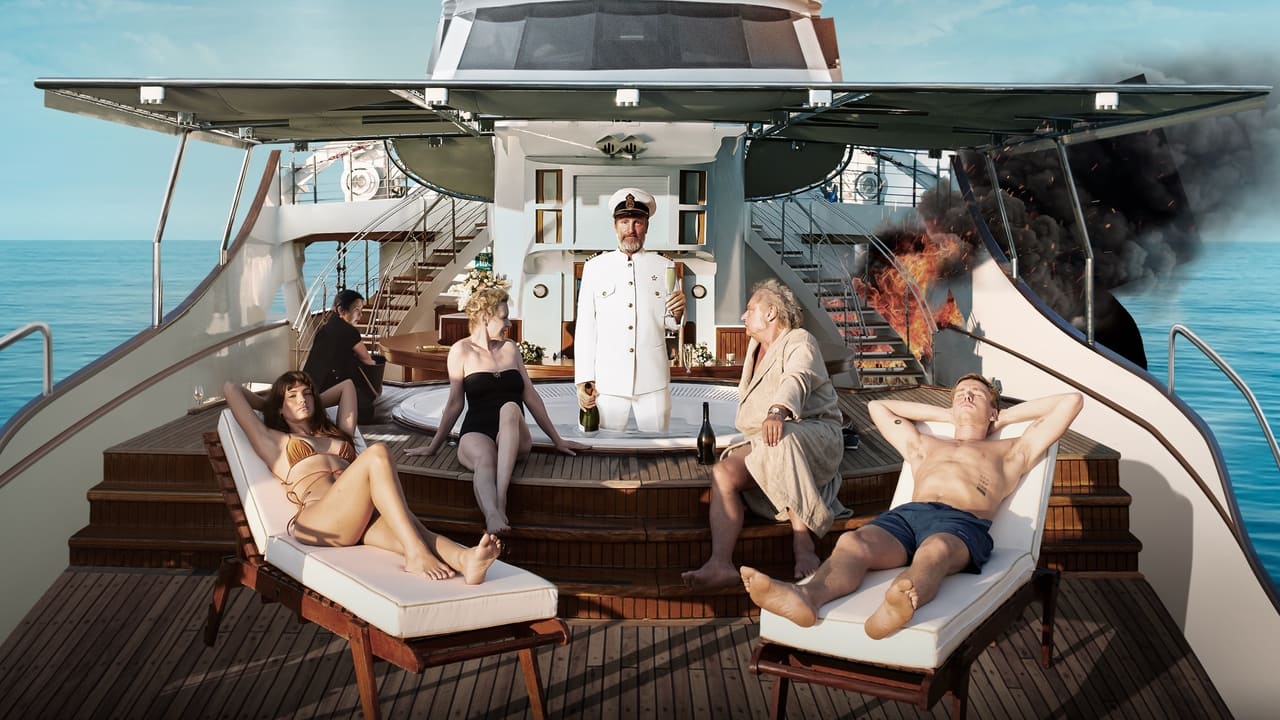

Tras la Semana de la moda, Carl y Yaya, pareja de modelos e influencers, son invitados a un yate en un crucero de lujo. Mientras que la tripulación brinda todas las atenciones necesarias a los ricos invitados, el capitán se niega a salir de su cabina, a pesar de la llegada inminente de la célebre cena de gala. Los eventos toman un giro inesperado y el equilibrio de poder se invierte cuando se levanta una tormenta que pone en peligro el confort de los pasajeros.
Reparto












Dónde ver
Suscripción
 Movistar Plus+
 Movistar Plus+ Ficción Total
 Filmin
 MUBI
 MUBI Amazon Channel
Alquiler
 Apple TV Store
 Rakuten TV
 Amazon Video
Compra
Apple TV StoreRakuten TVAmazon VideoFicha técnica
- Título original
- Triangle of Sadness
- Idiomas
- Ákán, English, Français, ελληνικά, svenska, Tagalog, Deutsch
- Países
- Denmark, France, Germany, Greece, Mexico, Sweden, Switzerland, Turkey, United Kingdom, United States of America
- Productoras
- 30WEST| BBC Film| Bord Cadre Films| Coproduction Office| Film i Väst| Heretic| Imperative Entertainment| Sovereign Films| Plattform Produktion| SVT| BFI| Piano| ARTE France Cinéma| Essential Filmproduktion| TRT 12 PUNTO| ZDF/Arte
- Presupuesto
- USD 15,600,000
- Recaudación
- USD 24,733,572
Cifras en dólares, según TMDb.
Críticas
(CASTELLANO) Lujo, vómitos y una isla donde el poder cambia de dueño Me gustó bastante. Es larga, incómoda y a veces demasiado evidente, pero también divertida, cruel y llena de escenas que se quedan. Lo que más me interesó no fue solo que se ría de los ricos, sino cómo va cambiando el poder de manos y demuestra que casi cualquiera, cuando obtiene ventaja, aprende rápido a usarla. La discusión inicial entre Carl y Yaya por el dinero está muy bien. Parece una pelea pequeña de pareja, pero habla de orgullo, roles de género, expectativas y poder. No discuten solo por una cuenta: discuten por lo que significa pagar y por cómo incluso una pareja moderna arrastra reglas viejas. Ver a esos millonarios rodeados de lujo y pendientes de estupideces me hizo pensar que debe de ser bastante triste tenerlo todo y vivir como si nada bastara. El dinero no es malo por sí mismo; lo triste es convertirlo en ostentación, capricho y desconexión. Lo suyo parece una existencia vacía envuelta en champán. La parte del yate es la más bestia y directa. La mujer que dice que las velas están sucias en un barco a motor resume la estupidez del privilegio. Lo de limpiar cristales bajo la lluvia también es buenísimo: una tarea absurda para mantener una apariencia absurda. Östlund no necesita sutileza; le basta con poner a los personajes haciendo el ridículo mientras todo se descontrola. La tormenta y la cena son un festival escatológico, pero funciona porque convierte el lujo en algo grotesco. Los ricos vomitando, pidiendo champán incluso para potarlo y aferrados al protocolo mientras todo se va literalmente a la mierda son una imagen brutal de las apariencias. El enfrentamiento entre el ruso capitalista y el capitán marxista también tiene mucha gracia. Los dos sueltan consignas, citas e ideología mientras el barco se hunde alrededor. La película no quiere que uno gane intelectualmente, sino dejar en ridículo a dos hombres encantados de escucharse a sí mismos justo cuando la realidad ya les ha pasado por encima. Y cuando suena “New Noise” de Refused, la película se viene arriba: entra como una patada y rompe de golpe todo el ambiente de lujo y etiqueta. La isla es lo mejor porque invierte las jerarquías. Abigail, que en el barco era la señora de los baños, pasa a ser la persona más importante porque sabe cazar, hacer fuego y cocinar. Y tiene razón: si consigue el pulpo y mantiene vivo al grupo, no tiene por qué repartirlo como si todos hubieran aportado lo mismo. El dinero deja de mandar; manda la utilidad real. Ahí la película se vuelve más cabrona. No dice simplemente “ricos malos, pobres buenos”. Cuando Abigail tiene poder, también lo usa. Controla la comida, decide quién recibe más, negocia con Carl y se aferra a su nueva posición. El poder no convierte mágicamente a nadie en noble; muchas veces solo cambia quién puede imponer las reglas. Lo de Carl acostándose con Abigail es incómodo y muy bueno. Antes su valor estaba en ser guapo y modelo; en la isla, su belleza sigue valiendo, pero como moneda de supervivencia. Ya no es glamour: es comida, refugio y protección. Yaya queda humillada y Abigail entiende perfectamente qué tiene entre manos. También me gustó mucho el tema de la comida. Nadie la controla, especialmente los niñatos. Abigail pone reglas y aun así se comen las galletas, como si los recursos fueran infinitos. Esa falta de autocontrol retrata muy bien a quienes han vivido esperando que siempre haya más. En tierra sería una tontería; en una isla puede condenar al grupo. La escena de la burra se hace eterna, pero justo por eso funciona. Todos hablan de sobrevivir, pero cuando toca matar un animal de verdad, todo es torpeza, incomodidad y patetismo. La civilización se les cae en cuanto tienen que hacer algo físico, sucio y necesario. El final en el resort me pareció muy bueno. Abigail descubre que no están perdidos en el fin del mundo, sino al lado del lujo, y entra en pánico porque sabe que su poder va a desaparecer. Volvería a ser invisible. El cierre abierto funciona: basta con entender su miedo y la carrera desesperada de Carl entre la maleza, con “Marea (We’ve Lost Dancing)” empujando esa energía final. No es perfecta. A veces es demasiado larga, demasiado obvia y demasiado encantada de su propia mala leche. Algunas metáforas son de brocha gorda, y entiendo a quien la vea como una sátira fácil sobre los ricos. Pero conmigo funcionó porque me hizo reír, me incomodó y me dejó pensando en cómo cambian las personas cuando cambia el reparto del poder. Al final, me queda como una película muy disfrutable, ácida y bastante inteligente, aunque no siempre fina. Me gustó la discusión del dinero, el desastre del barco, el absurdo de las apariencias, Refused, Abigail tomando el mando, la comida como poder y ese final en el resort. Una sátira desigual, sí, pero con escenas potentes y una idea clara: cuando el mundo se da la vuelta, los privilegios no desaparecen; solo buscan nuevo dueño. (ENGLISH) Luxury, vomit and an island where power changes hands I liked it quite a lot. It is long, uncomfortable and sometimes too obvious, but also funny, cruel and full of scenes that stay. What interested me most was not only that it laughs at rich people, but how it moves power around and shows that almost anyone, once they have an advantage, learns quickly how to use it. The opening argument between Carl and Yaya about money is very good. It looks like a small couple's fight, but it is about pride, gender roles, expectations and power. They are not only arguing about a bill: they are arguing about what paying means and about how even a modern couple still carries old rules. Watching those millionaires surrounded by luxury and obsessed with stupid things made me think it must be quite sad to have everything and live as if nothing were enough. Money is not bad in itself; the sad thing is turning it into ostentation, whims and disconnection. Their world feels like an empty existence wrapped in champagne. The yacht section is the wildest and most direct. The woman saying the sails are dirty on a motor yacht sums up the stupidity of privilege. Cleaning windows while it rains is also great: an absurd task to maintain an absurd appearance. Östlund does not need subtlety; he only has to show the characters making fools of themselves while everything spins out of control. The storm and the dinner are a scatological festival, but it works because it turns luxury into something grotesque. The rich vomiting, asking for champagne even to throw it up and clinging to protocol while everything literally goes to shit create a brutal image of appearances. The clash between the Russian capitalist and the Marxist captain is also very funny. Both throw around slogans, quotes and ideology while the ship sinks around them. The film does not want either of them to win intellectually, but to make two men in love with their own voices look ridiculous just as reality has already overtaken them. And when Refused's "New Noise" plays, the film takes off: it comes in like a kick and breaks the atmosphere of luxury and etiquette. The island is the best part because it reverses the hierarchies. Abigail, who was the toilet manager on the yacht, becomes the most important person because she can hunt, make fire and cook. And she is right: if she catches the octopus and keeps the group alive, she does not have to share it as if everyone had contributed equally. Money stops ruling; real usefulness does. There the film becomes nastier. It does not simply say "rich bad, poor good". When Abigail has power, she also uses it. She controls the food, decides who gets more, negotiates with Carl and clings to her new position. Power does not magically make anyone noble; often it only changes who gets to impose the rules. Carl sleeping with Abigail is uncomfortable and very good. Before, his value came from being handsome and a model; on the island, his beauty still has value, but now as a currency of survival. It is no longer glamour: it is food, shelter and protection. Yaya is humiliated and Abigail understands perfectly what she has in her hands. I also really liked the food issue. Nobody controls it, especially the spoiled youngsters. Abigail sets rules and they still eat the crackers, as if resources were infinite. That lack of self-control portrays very well people who have lived expecting there to always be more. On land it would be silly; on an island it can condemn the group. The donkey scene feels endless, but that is exactly why it works. Everyone talks about survival, but when they actually have to kill an animal, everything becomes clumsy, uncomfortable and pathetic. Civilization falls off them the moment they have to do something physical, dirty and necessary. The ending at the resort seemed very good to me. Abigail discovers they are not lost at the end of the world, but next to luxury, and she panics because she knows her power will disappear. She would become invisible again. The open ending works: it is enough to understand her fear and Carl's desperate run through the bushes, with "Marea (We've Lost Dancing)" pushing that final energy. It is not perfect. Sometimes it is too long, too obvious and too pleased with its own nastiness. Some metaphors are broad, and I understand anyone who sees it as an easy satire of the rich. But it worked for me because it made me laugh, made me uncomfortable and left me thinking about how people change when the distribution of power changes. In the end, it remains for me a very enjoyable, acidic and quite intelligent film, although not always subtle. I liked the money argument, the ship disaster, the absurdity of appearances, Refused, Abigail taking command, food as power and that ending at the resort. An uneven satire, yes, but with powerful scenes and a clear idea: when the world turns upside down, privileges do not disappear; they simply look for a new owner.
Recomendadas

Digger
2026 · Película

Dinner at Eight
1933 · Película

Falsa Influencer
2022 · Película

Caerse de risa
2020 · Película

Un rey en Nueva York
1957 · Película

Tipos de gentileza
2024 · Película

Critical Care
1997 · Película

Hospital Britannia
1982 · Película

Nowhere
2023 · Película

Nadie Especial
2021 · Película

Bugonia
2025 · Película

Rescate en el Golfo
2025 · Película

Código 3
2025 · Película

La biblia de Clarence
2024 · Película
Similares

A Fair Trade
2026 · Película

Noche larga y febril
1958 · Película

Rave Review
1995 · Película

Fame and Other Four Letter Words
2025 · Película

Jailbait!
2000 · Película

Sighborg
2020 · Película

Los Roses
2025 · Película

For Y'ur Height Only
1981 · Película

Island in the Sky
1953 · Película

Lobos
2024 · Película

Nasciturus
2020 · Película

Struwwelerror
2020 · Película

Pro-Black Sheep
2009 · Película

Every Dog Has Its Day
1998 · Película