
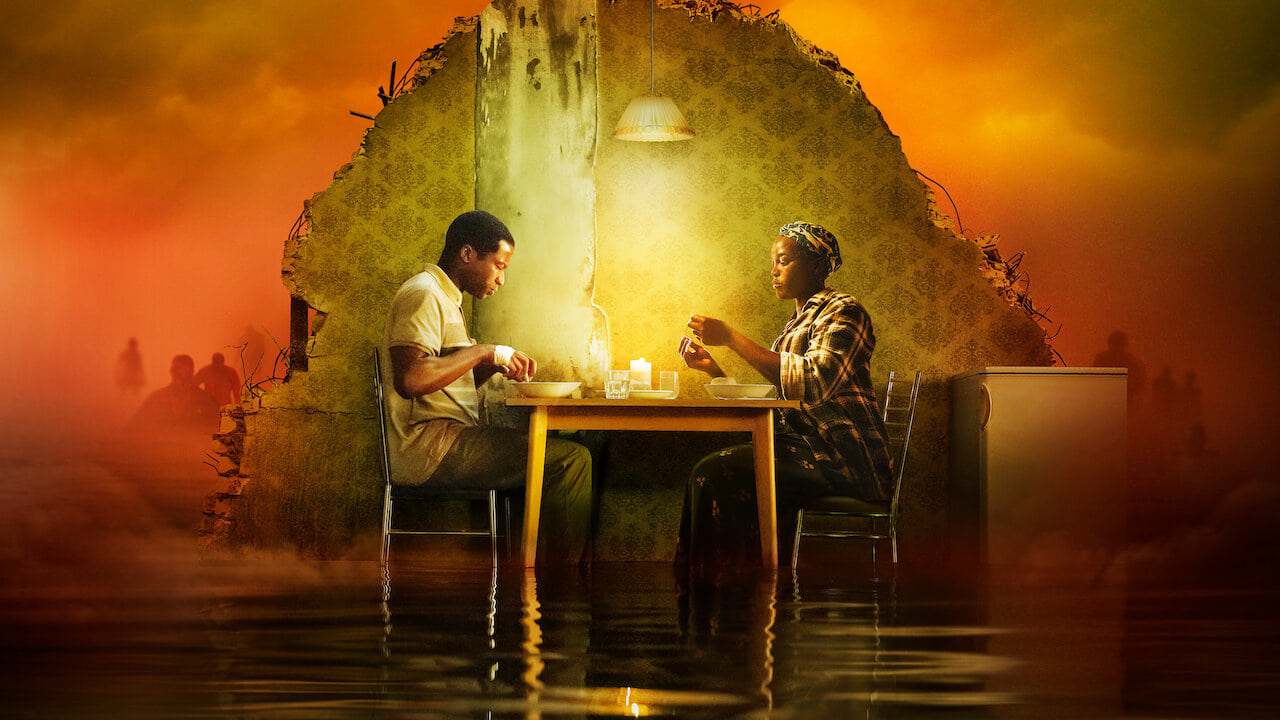

Una pareja de refugiados de Sudán, un país arrasado por la guerra, trata de sobrevivir en un pequeño pueblo de Inglaterra hasta que descubren que allí les aguarda un peligroso mal.
Reparto

Ṣọpẹ́ Dìrísù
Bol Majur

Wunmi Mosaku
Rial Majur
Malaika Wakoli-Abigaba
Nyagak

Matt Smith
Mark Essworth

Javier Botet
The Witch
Yvonne Campbell
South Sudanese Woman

Vivienne Soan
Neighbour
Lola May
Nyagak's Mother

Kevin Layne
The Cameroonian
Maureen Casey
Detention Custody Officer

Homer Todiwala
Iraqi Man

Dominic Coleman
Lead Officer

Sally Plumb
Secondary Officer

Roland Manookian
Barber
Dónde ver
Suscripción
 Netflix
 Netflix Standard with Ads
Ficha técnica
- Título original
- His House
- Idiomas
- English
- Países
- United Kingdom, United States of America
- Productoras
- New Regency Pictures| BBC Film| Starchild Pictures| Vertigo Entertainment| Regency Enterprises
Críticas
(CASTELLANO) Al principio lo que asusta son las paredes. Los ruidos que parecen venir de dentro, las voces cuando cae la noche, las figuras que apenas se distinguen y ese rostro blanco que aparece donde no debería haber nadie. Casa ajena funciona durante buena parte de su metraje como una película de casa encantada muy eficaz. Después entiendes que Remi Weekes estaba hablando de algo bastante más terrible. Bol y Rial han escapado de Sudán del Sur y reciben alojamiento en Inglaterra mientras esperan poder empezar una vida nueva. La casa que debería significar seguridad resulta fría, deteriorada y hostil, pero también lo es el mundo exterior. No son recibidos exactamente como personas que han sobrevivido a algo espantoso, sino como gente que debe demostrar continuamente que merece quedarse. Matt Smith interpreta muy bien esa cordialidad administrativa que nunca termina de ser verdadera cercanía. Weekes convierte así el espacio doméstico en una prolongación de sus protagonistas. La vivienda se agrieta, parece guardar cosas y se vuelve amenazante conforme aquello que Bol y Rial intentan dejar atrás empieza a ocuparlo todo. La fotografía de Jo Willems aprovecha especialmente bien la oscuridad y los espacios vacíos; no necesita convertir cada rincón en una atracción de feria para hacer que resulte inquietante. Hay imágenes realmente desagradables y apariciones que me dieron miedo de verdad. Pero la película cambia cuando empezamos a comprender qué arrastran sus personajes. Ahí dejó de importarme tanto averiguar qué había dentro de la casa y empezó a importarme qué había dentro de ellos. El horror sobrenatural se convierte progresivamente en la forma que adopta una culpa que ninguno puede abandonar simplemente cruzando una frontera. Y me parece mucho más interesante que la típica explicación de que una vivienda está maldita porque allí ocurrió algo terrible. Bol y Rial responden además de manera muy distinta. Él intenta mirar hacia delante, integrarse y convencerse de que una nueva vida puede borrar la anterior. Ella parece aceptar mucho antes que ciertas cosas no desaparecen por negarlas. Ṣọpẹ́ Dìrísù y Wunmi Mosaku están magníficos precisamente porque no interpretan el trauma de la misma manera. En Rial, Mosaku mezcla dolor, cansancio y una especie de lucidez que termina resultando especialmente conmovedora. La película es también bastante inteligente al hablar de la experiencia del refugiado sin abandonar el género de terror. No convierte el drama migratorio en un adorno respetable colocado alrededor de los sustos: ambas cosas son la misma historia. El miedo a perder el hogar, a no pertenecer a ningún sitio, a tener que agradecer incluso aquello que te humilla y a convivir con lo que hiciste o viste para sobrevivir alimenta directamente lo sobrenatural. No todo funciona con la misma fuerza. Cuando la película explica más claramente su mitología pierde algo del terror puro que tenía durante su primera mitad, y el clímax me parece menos inquietante que las apariciones anteriores. El miedo disminuye justo cuando el drama emocional aumenta. Pero, en mi caso, ese cambio no perjudicó demasiado la película porque lo sustituyó por algo que terminó afectándome mucho más. Acabé llorando. Empecé mirando los rincones de la casa esperando que apareciera algo y terminé pensando en el dolor, la pérdida y la culpa que acompañan a personas capaces de haber sobrevivido físicamente sin haber escapado realmente de aquello que dejaron atrás. Casa ajena da miedo cuando quiere dar miedo, pero sus mejores fantasmas no viven en las paredes. Viajan con nosotros. (ENGLISH) At first, the walls are what frighten you. Noises seem to come from inside them, voices emerge after dark, figures appear where nobody should be standing, and a pale face glimpsed in the shadows is genuinely unsettling. For a substantial part of its running time, His House works extremely well as a haunted-house film. Then it becomes clear that Remi Weekes is talking about something far more disturbing. Bol and Rial have escaped South Sudan and are given a house in England while trying to begin a new life. What should represent safety is cold, damaged and hostile, but the outside world is hardly warmer. They are not simply treated as people who have survived something terrible; they constantly seem required to prove that they deserve the chance they have been given. Matt Smith is particularly effective at embodying a kind of administrative politeness that never quite becomes human warmth. Weekes gradually turns the house into an extension of its inhabitants. Walls crack, spaces seem to conceal memories, and the building becomes increasingly threatening as everything Bol and Rial hoped to leave behind begins to occupy it. Jo Willems' cinematography makes excellent use of darkness and empty space. The film does not need to turn every room into a fairground attraction to make the house frightening. But the film changes once we begin to understand what its characters are carrying with them. At that point, I became less interested in what might be inside the house and much more interested in what was inside them. The supernatural horror increasingly becomes the physical shape of guilt that cannot simply be abandoned by crossing a border. That is much more compelling to me than the usual explanation that a house is haunted because something awful once happened there. Bol and Rial also deal with their past very differently. He wants to look forward, assimilate and convince himself that a new life can erase the old one. She seems to understand much earlier that some things do not disappear merely because we refuse to look at them. Ṣọpẹ́ Dìrísù and Wunmi Mosaku are excellent because they never portray trauma in the same way. Mosaku in particular gives Rial a mixture of pain, exhaustion and clarity that becomes deeply moving. The film is also intelligent in the way it approaches the refugee experience without abandoning horror. Migration is not a worthy social subject placed around a conventional ghost story: the two elements are inseparable. Fear of losing a home, belonging nowhere, being expected to feel grateful even while being humiliated, and living with whatever was done or witnessed in order to survive all feed directly into the supernatural. Not everything is equally effective. Once the mythology becomes more explicit, some of the raw fear of the first half disappears, and I found the climax less unsettling than the earlier apparitions. The horror becomes less frightening at exactly the point where the emotional drama becomes stronger. In my case, however, that did not hurt the film much because it replaced fear with something that affected me more deeply. By the end, I was crying. I began the film staring into dark corners, waiting for something to appear. I finished it thinking about grief, loss and the guilt carried by people who may have escaped physically without ever truly escaping what happened to them. His House is frightening when it wants to be, but its best ghosts do not live inside walls. We carry them with us.
Recomendadas

Repulsion
1965 · Película

El orfanato
2007 · Película
Midsommar: el terror no espera la noche
2019 · Película

Cuando las luces se apagan
2016 · Película

Las horas pasadas
2017 · Película

El legado del diablo
2018 · Película

Blood on Satan's Claw
1971 · Película

La casa del fin de los tiempos
2013 · Película

Exterminio 2
2007 · Película

Presencia
2025 · Película

Possum
2018 · Película

Somnia: Antes de despertar
2016 · Película

Invocación
2025 · Película

Siniestro
2012 · Película
Similares

Amenaza en la Sombra
1973 · Película

The Black Screen II - Retribution
2024 · Película

Mulholland Drive: Sueños, misterios y secretos
2001 · Película

Leyendas de Pasión
1994 · Película

Viernes 13
1980 · Película

Haunted 4: Demons
2020 · Película

枕邊凶靈
2002 · Película

Trono de sangre
1957 · Película

Sustainable Life With Unlimited Transformations
2021 · Película

అంధగాడు
2017 · Película

Clementina
2019 · Película

Haunting Villisca
2009 · Película

Gli orrori del castello di Norimberga
1972 · Película

Der letzte Kannibale
2011 · Película