

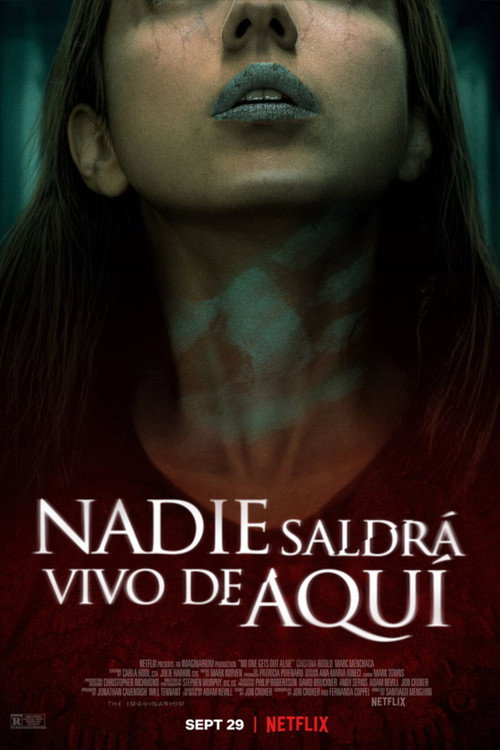
Desesperada y sin documentos, una mujer proveniente de México se muda a una deteriorada pensión en Cleveland, donde empieza a tener extrañas y perturbadoras visiones.
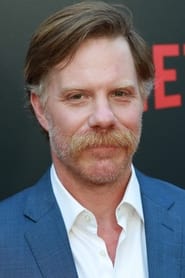
Reparto






Tráiler
Dónde ver
Suscripción
 Netflix
 Netflix Standard with Ads
Ficha técnica
- Título original
- No One Gets Out Alive
- Idiomas
- Español, English, Português, Română
- Países
- United Kingdom
- Productoras
- The Imaginarium
Críticas
(CASTELLANO) Hay películas de terror que funcionan mejor cuando parecen estar contando una historia y, poco a poco, revelan que en realidad estaban preparando otra. Nadie saldrá vivo de aquí me gustó precisamente por eso. Empieza con una sensación muy concreta de amenaza humana, casi de thriller, y después va desplazándose hacia un terreno sobrenatural cada vez más extraño. Ese cambio de registro le da una personalidad que no esperaba y consigue que la película crezca en lugar de agotarse en su primera idea. Santiago Menghini trabaja muy bien el edificio como espacio. No es simplemente un decorado oscuro donde ocurren cosas, sino un lugar que parece guardar capas de historias, presencias y secretos. Los pasillos, las habitaciones, los sonidos y la sensación de aislamiento construyen una atmósfera eficaz. La película entiende que el terror no necesita correr todo el tiempo: basta con hacer que un espacio cotidiano empiece a sentirse incorrecto. También me gustó que no dependa únicamente del susto. Hay una progresión clara desde el miedo a otras personas hacia algo más difícil de explicar. Esa transición está bien medida porque durante bastante tiempo no sabemos exactamente qué tipo de película estamos viendo. Puede parecer un thriller sobre una mujer vulnerable atrapada en una situación peligrosa, pero poco a poco la historia abre otras puertas y el horror se vuelve más amplio. Cristina Rodlo es fundamental para que todo funcione. Tiene una presencia muy cercana y una cara dulce y expresiva que transmite vulnerabilidad sin convertir al personaje en alguien pasivo. Resulta fácil conectar con ella desde el principio, y su interpretación sostiene buena parte del peso emocional. La cámara confía mucho en su rostro y ella responde con miedo, cansancio, desconcierto y resistencia de una manera muy natural. Además, que sea una inmigrante mexicana no aparece como simple dato decorativo. Su situación económica, la precariedad y la dificultad para confiar en los demás aumentan su aislamiento. La película utiliza esa vulnerabilidad social como parte del terror sin reducirla a un sermón. Hay una sensación constante de estar en un lugar donde pedir ayuda no resulta sencillo, y eso refuerza la angustia. La parte sobrenatural me funcionó mejor de lo que esperaba. No porque cada elemento sea especialmente original, sino porque la película va combinando casa encantada, trauma, superstición y horror ritual hasta construir algo más raro de lo que parecía al comienzo. Esa mutación es uno de sus mayores aciertos. Cuando una película de terror consigue que su amenaza vaya cambiando de forma sin perder coherencia, gana muchísimo. También agradezco que tenga una imaginería propia. Hay visiones, sonidos y formas que no se limitan al fantasma convencional apareciendo detrás de una puerta. La estética es sucia, húmeda y opresiva, y encaja muy bien con ese edificio deteriorado. Incluso cuando algunos efectos son más explícitos, conserva una sensación desagradable que le sienta bien. No todo funciona igual. Hay tramos algo lentos y algunas ideas podrían haberse desarrollado con más claridad. En determinados momentos el guion acumula elementos y no siempre todos tienen el mismo peso. También hay secundarios más funcionales que complejos. Pero, a diferencia de otras películas de terror mucho más simples, aquí sentí que había intención de construir un universo propio y no solo encadenar sustos. El terror funciona especialmente bien cuando deja dudas. La película ofrece información, pero no mata por completo el misterio. Hay suficientes piezas para comprender la naturaleza general de lo que está ocurriendo, pero también queda la sensación de algo antiguo, oscuro y difícil de abarcar del todo. Ese equilibrio me gusta más que cuando una película termina explicándolo absolutamente todo. También me pareció interesante la mezcla entre horror social y sobrenatural. La protagonista ya está atrapada antes de que aparezca cualquier elemento fantástico: atrapada por el dinero, por la falta de opciones y por una situación vital precaria. Lo sobrenatural no sustituye esa realidad, sino que la amplifica. Eso hace que el miedo tenga una base más sólida. Por eso me gustó bastante más de lo que esperaba. No me parece una obra maestra ni una película revolucionaria, pero sí una propuesta con atmósfera, una protagonista que funciona muy bien y una evolución que consigue sorprender. Empieza pareciendo una cosa y termina siendo otra bastante más extraña y ambiciosa. Nadie saldrá vivo de aquí tiene imperfecciones, pero también personalidad. Cristina Rodlo sostiene la película con mucha naturalidad y el edificio acaba convirtiéndose en algo más que un escenario. Una película de terror oscura, triste y bastante efectiva, que me dejó una impresión mucho mejor que muchas producciones recientes del género. (ENGLISH) Some horror films work best when they seem to be telling one story and, little by little, reveal they were actually setting up another. That's exactly why I liked No One Gets Out Alive. It starts with a very concrete sense of human threat, almost like a thriller, and then gradually shifts toward increasingly strange supernatural territory. That change of register gives it a personality I wasn't expecting, and it allows the film to grow instead of running out of steam on its first idea. Santiago Menghini handles the building as a space very well. It isn't simply a dark set where things happen, but a place that seems to hold layers of stories, presences and secrets. The hallways, the rooms, the sounds and the sense of isolation build an effective atmosphere. The film understands that horror doesn't need to be running constantly: it's enough to make an everyday space start to feel wrong. I also liked that it doesn't rely solely on the jump scare. There's a clear progression from fear of other people toward something harder to explain. That transition is well paced because for quite a while we don't know exactly what kind of film we're watching. It can look like a thriller about a vulnerable woman trapped in a dangerous situation, but little by little the story opens other doors and the horror becomes broader. Cristina Rodlo is essential to making it all work. She has a very approachable presence and a sweet, expressive face that conveys vulnerability without turning the character into someone passive. It's easy to connect with her from the start, and her performance carries much of the emotional weight. The camera relies heavily on her face, and she responds with fear, exhaustion, confusion and resistance in a very natural way. The fact that she's a Mexican immigrant also isn't just a decorative detail. Her financial situation, her precariousness and her difficulty trusting others deepen her isolation. The film uses that social vulnerability as part of the horror without reducing it to a lecture. There's a constant sense of being in a place where asking for help isn't easy, and that reinforces the anguish. The supernatural side worked better for me than I expected. Not because every element is especially original, but because the film keeps combining haunted house, trauma, superstition and ritual horror until it builds into something stranger than it seemed at the start. That mutation is one of its biggest achievements. When a horror film manages to keep its threat changing shape without losing coherence, it gains a lot. I also appreciate that it has its own imagery. There are visions, sounds and shapes that aren't limited to the conventional ghost appearing behind a door. The aesthetic is dirty, damp and oppressive, and it fits very well with that deteriorated building. Even when some effects are more explicit, it keeps an unpleasant feeling that suits it well. Not everything works equally well. There are some slower stretches and a few ideas could have been developed more clearly. At certain points the script piles on elements, and not all of them carry the same weight. There are also supporting characters that are more functional than complex. But unlike other, much simpler horror films, here I felt there was an intention to build its own universe rather than just stringing together scares. The horror works especially well when it leaves doubts. The film offers information, but it doesn't completely kill the mystery. There are enough pieces to understand the general nature of what's happening, but there's still a sense of something ancient, dark and impossible to fully grasp. I like that balance more than when a film ends up explaining absolutely everything. I also found the mix of social and supernatural horror interesting. The protagonist is already trapped before any fantastical element appears: trapped by money, by lack of options and by a precarious life situation. The supernatural doesn't replace that reality, it amplifies it. That gives the fear a more solid foundation. That's why I liked it quite a bit more than I expected. I don't think it's a masterpiece or a revolutionary film, but it is a proposal with atmosphere, a protagonist who works very well and an evolution that manages to surprise. It starts out looking like one thing and ends up being something else, stranger and more ambitious. No One Gets Out Alive has flaws, but it also has personality. Cristina Rodlo carries the film very naturally, and the building ends up becoming something more than just a setting. A dark, sad and fairly effective horror film that left me with a much better impression than many recent genre releases.
Recomendadas

Cosecha Oscura
2023 · Película

Más Negro que la Noche
1975 · Película

Bárbaro
2022 · Película

The Evil
1978 · Película

The Hideout
2007 · Película

Historias de miedo para contar en la oscuridad
2019 · Película
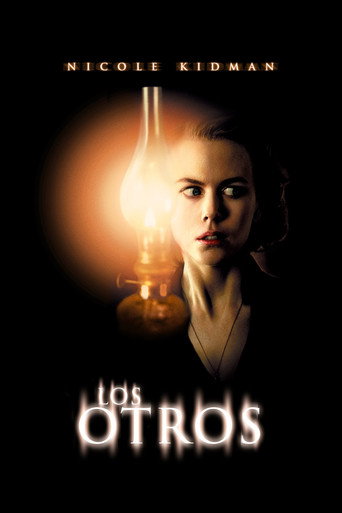
Los otros
2001 · Película

Nightmare
1964 · Película

The Believers
1987 · Película

La centinela
1977 · Película

Inmaculada
2024 · Película

Bone Lake
2025 · Película
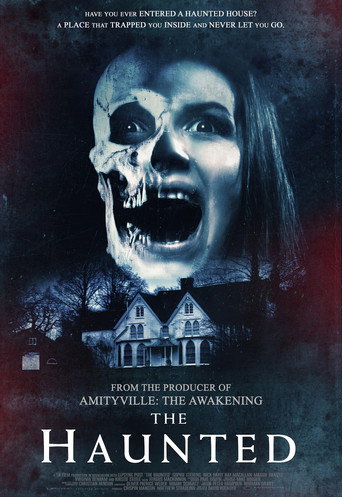
Fantasmas
2018 · Película

Observada tras la ventana
2022 · Película
Similares

Dejados Atrás 3: El Mundo en Guerra
2005 · Película

Invierno profundo
2010 · Película

Restless Souls
1998 · Película

Sorcerer
1977 · Película

八つ墓村
2004 · Película

Espía a la caza
2023 · Película

Ripley Under Ground
2007 · Película

Bad Ben: The Way In
2019 · Película

Drácula
1931 · Película

La Nuit du réveillon
2014 · Película
Murder by Proxy
1954 · Película
Billion-Dollar Ransom
— · Película

The Human Factor
1979 · Película

La espía roja
2018 · Película