
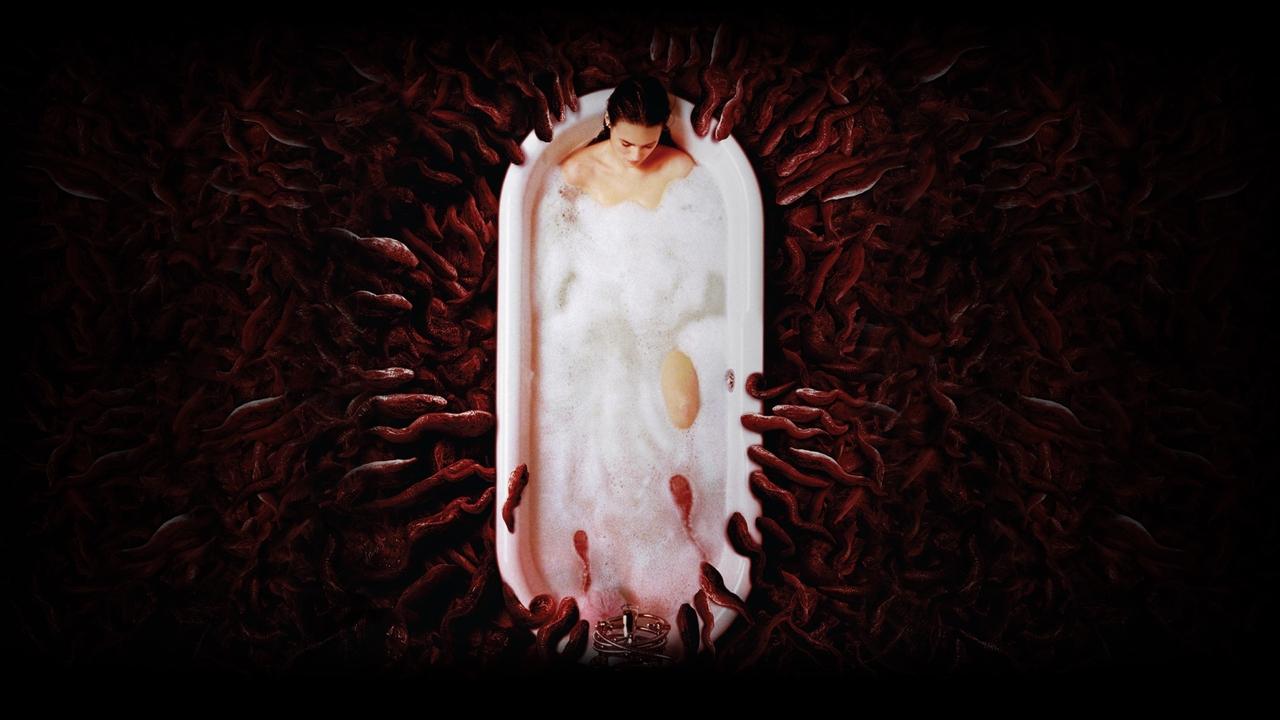

Película · 2006
Criaturas Rastreras
Dirección: James Gunn
Wheelsy es un pueblo soñoliento de Estados Unidos, pintoresco y tranquilo. Sus simpáticos habitantes no meten las narices donde no les llaman. Pero por debajo de este bonito barniz se esconde algo sin nombre, malévolo, y ese algo crece. Nadie parece darse cuenta de que cada vez hay más avisos de animales de compañía perdidos ni que Grant Grant , uno de los ciudadanos más prósperos del pueblo, empieza a comportarse de un modo muy raro. Pero cuando el ganado aparece horriblemente mutilado y una joven desaparece, el sheriff Bill Pardy y sus hombres, con la ayuda de la esposa de Grant, Starla descubren la existencia de una fuerza oscura que asedia el pueblo.
Reparto

Nathan Fillion
Bill Pardy

Michael Rooker
Grant Grant

Elizabeth Banks
Starla Grant

Gregg Henry
Jack MacReady

Tania Saulnier
Kylie Strutemyer

Don Thompson
Wally

Brenda James
Brenda Gutierrez

Jennifer Copping
Margaret

Jenna Fischer
Shelby

Haig Sutherland
Trevor

William MacDonald
Mr. Strutemyer

Iris Quinn
Mrs. Strutemyer

Matreya Fedor
Emily Strutemyer
Amber Lee Bartlett
Jenna Strutemyer
Dónde ver
Suscripción
 Movistar Plus+ Ficción Total
 SkyShowtime
Alquiler
 Apple TV Store
 Amazon Video
Compra
Apple TV StoreAmazon VideoFicha técnica
- Título original
- Slither
- Idiomas
- English
- Países
- Canada, United States of America
- Productoras
- Strike Entertainment| Slither Productions| Gold Circle Films| Brightlight Pictures
- Presupuesto
- USD 15,000,000
- Recaudación
- USD 12,834,936
Cifras en dólares, según TMDb.
Críticas
(CASTELLANO) Hay películas que intentan dar miedo y otras que parecen disfrutar viendo hasta dónde pueden llevar el asco antes de que uno empiece a reírse. Slither: La plaga pertenece claramente al segundo grupo. Es viscosa, grotesca, exagerada y orgullosamente de serie B, pero detrás de toda esa mugre hay bastante más control del que parece. James Gunn entiende que el gore puede ser repulsivo y divertido al mismo tiempo, y construye una película que vive precisamente de ese equilibrio. Lo primero que llama la atención al verla hoy es cuánto del Gunn posterior ya estaba aquí. El humor macarra, los personajes imperfectos pero simpáticos, la violencia convertida en gag, el cariño por los monstruos y esa costumbre de rodearse de actores que luego reaparecerían una y otra vez en su cine. Slither: La plaga parece casi un laboratorio donde Gunn estaba probando una personalidad que años después llevaría a producciones muchísimo mayores. Michael Rooker es quizá el ejemplo más evidente. Tiene esa presencia física extraña que Gunn sabe utilizar tan bien: puede resultar amenazante, patético y hasta cómico con muy pocos gestos. Viéndolo aquí se entiende perfectamente por qué terminó convirtiéndose en uno de sus actores fetiche. Pero también está Nathan Fillion, otro rostro recurrente en su filmografía, con ese tono de héroe ligeramente torpe y socarrón que encaja de maravilla con el absurdo general. Elizabeth Banks aporta el contrapunto necesario. Está guapísima, sí, pero además consigue mantener una cierta normalidad emocional dentro de una película que continuamente amenaza con convertirse en un festival de fluidos, deformaciones y criaturas repugnantes. Su presencia ayuda a que el conjunto no se vuelva solo una colección de efectos grotescos. El body horror es probablemente lo que más define la experiencia. Gunn no busca que las transformaciones resulten elegantes ni siniestras de una manera sofisticada: quiere que den grima. Hay una fijación consciente por lo húmedo, lo pegajoso, lo hinchado y lo corporalmente incorrecto. Y ahí la película tiene personalidad, porque no es gore por el gore; existe una intención cómica muy clara detrás de casi todo. El "puaj" y la carcajada están constantemente pegados. También funciona porque abraza sin complejos su condición de homenaje. Hay ecos del terror alienígena, del cine de invasiones, de las mutaciones corporales y de aquellas películas de videoclub que mezclaban monstruos, zombis y humor bruto sin preocuparse demasiado por la respetabilidad. Gunn no reinventa nada esencial, pero combina influencias con suficiente energía y sentido del ritmo como para que la película tenga identidad propia. Eso sí, el humor no siempre entra igual. Hay momentos deliberadamente paletos y chistes muy de principios de los 2000 que hoy pueden sentirse algo toscos. El tono es tan excesivo que quien no conecte con esa mezcla de vulgaridad, casquería y absurdo probablemente se baje muy rápido. Slither: La plaga no intenta gustar a todo el mundo y, de hecho, buena parte de su encanto está en lo poco que le preocupa resultar fina. Visualmente tiene además un encanto práctico que hoy se agradece. Las criaturas, prótesis, maquillajes y deformaciones poseen una materialidad que hace que el asco funcione mejor. No todo envejece de manera perfecta, pero precisamente esa textura física le da un carácter que muchas producciones posteriores, más limpias digitalmente, no consiguen reproducir. La película tampoco necesita ser especialmente profunda para funcionar. Su ambición está en otra parte: ritmo, criaturas, humor negro y personajes capaces de sostener la locura. Nathan Fillion aporta carisma, Rooker se entrega completamente al juego y Banks consigue que haya algo emocionalmente reconocible en medio del caos. Esa combinación permite que la película sea más simpática de lo que sugeriría su cantidad de babas. Me ha sorprendido sobre todo reconocer aquí tantas cosas que luego asociaría inmediatamente con James Gunn. No parece simplemente una rareza de sus comienzos, sino una declaración bastante clara de intereses: monstruos, marginales, humor desagradable, violencia juguetona y una extraña ternura escondida debajo de lo grotesco. Todo eso ya estaba aquí antes de los superhéroes y de los presupuestos gigantescos. Slither: La plaga no es refinada ni pretende serlo. Es una comedia de terror asquerosa, gamberra y muy consciente de sus referentes. A ratos puede pasarse de viscosidad y su humor tiene altibajos, pero mantiene energía, personalidad y un reparto que entiende perfectamente el juego. Una de esas películas que te hacen pensar "qué guarrada" mientras sigues mirando con una sonrisa. Y viéndola tantos años después, además, resulta muy divertido descubrir en ella el ADN completo del James Gunn que vendría después. (ENGLISH) Some films try to scare you, while others seem to enjoy seeing how far they can push disgust before you start laughing. Slither clearly belongs to the second group. It is slimy, grotesque, exaggerated and proudly B-movie, but beneath all that grime there is far more control than it first appears. James Gunn understands that gore can be repulsive and funny at the same time, and he builds the film around precisely that balance. The first thing that stands out when watching it today is how much of the later Gunn was already here. The rowdy humour, the flawed but likeable characters, violence turned into a gag, affection for monsters and the habit of surrounding himself with actors who would later reappear again and again in his films. Slither feels almost like a laboratory in which Gunn was testing a personality he would later take into productions on a much larger scale. Michael Rooker is perhaps the clearest example. He has that strange physical presence Gunn knows how to use so well: he can seem threatening, pathetic and even funny with very few gestures. Watching him here makes it easy to understand why he became one of Gunn's favourite actors. But Nathan Fillion is here too, another recurring face in his filmography, with that slightly clumsy, sardonic heroism that fits the general absurdity perfectly. Elizabeth Banks provides the necessary counterweight. She looks gorgeous, yes, but she also manages to preserve a certain emotional normality inside a film that constantly threatens to become a festival of fluids, deformities and disgusting creatures. Her presence helps keep the whole thing from becoming merely a collection of grotesque effects. Body horror is probably what most defines the experience. Gunn does not want the transformations to look elegant or sophisticatedly sinister: he wants them to make you squirm. There is a very deliberate fixation on the wet, the sticky, the swollen and the physically wrong. That is where the film finds personality, because it is not gore for gore's sake; there is a very clear comic intention behind almost everything. The "ugh" and the laugh are constantly stuck together. It also works because it embraces its status as a tribute without embarrassment. There are echoes of alien horror, invasion movies, bodily mutation and those video-store films that mixed monsters, zombies and crude humour without worrying much about respectability. Gunn does not reinvent anything essential, but he combines his influences with enough energy and sense of rhythm to give the film an identity of its own. That said, the humour does not always land equally well. There are deliberately redneck moments and jokes very much of the early 2000s that can feel a little rough today. The tone is so excessive that anyone who does not connect with that mixture of vulgarity, gore and absurdity will probably check out quickly. Slither does not try to please everyone, and in fact much of its charm lies in how little it cares about being tasteful. Visually, it also has a practical charm that is especially welcome today. The creatures, prosthetics, make-up and deformities have a material quality that makes the disgust work better. Not everything has aged perfectly, but that physical texture gives the film a character that many later, digitally cleaner productions fail to reproduce. The film does not need to be especially deep to work either. Its ambition lies elsewhere: pace, creatures, black humour and characters capable of holding the madness together. Nathan Fillion brings charisma, Rooker commits completely to the game and Banks manages to keep something emotionally recognizable alive amid the chaos. That combination makes the film more likeable than its quantity of slime would suggest. What surprised me most was recognizing so many things here that I would later immediately associate with James Gunn. It does not feel merely like an oddity from his early career, but like a fairly clear statement of interests: monsters, outsiders, unpleasant humour, playful violence and a strange tenderness hidden underneath the grotesque. All of that was already here before the superheroes and the gigantic budgets. Slither is not refined and has no interest in pretending otherwise. It is a gross, rowdy horror comedy that is very aware of its influences. At times it can overdo the slime and its humour is uneven, but it retains energy, personality and a cast that understands the game perfectly. It is one of those films that makes you think "that's disgusting" while you keep watching with a smile. And seeing it so many years later, it is also great fun to discover in it the complete DNA of the James Gunn who would come afterward.
Recomendadas

Goreman: El psicópata
2020 · Película

Fenómenos De La Naturaleza
2015 · Película

Extinción
2015 · Película

Cacería voraz
2005 · Película

El terror llama a su puerta
1986 · Película

La bahia
2012 · Película

Cuentos de Terror
1982 · Película

La mosca
1986 · Película

La cosa del otro mundo
2011 · Película

The Kindred
1987 · Película

Alligator
1980 · Película

La Noche del Cometa
1984 · Película
Alerta Extinción
2026 · Película

Instinto voraz
2024 · Película
Similares

男神游戏
2022 · Película

King Kong contra Godzilla
1962 · Película

Zootopia
2016 · Película

SCHIZM
2025 · Película

Nowhere
1997 · Película

Tres son Multitud
2006 · Película

Dogma
1999 · Película
Willy's Wonderland
2021 · Película

Los cómplices del infierno
1995 · Película

Hellboy
2019 · Película

Twin Peaks: fuego camina conmigo
1992 · Película

Hulk
2003 · Película

El sorprendente Hombre Araña
2012 · Película

eXistenZ
1999 · Película