
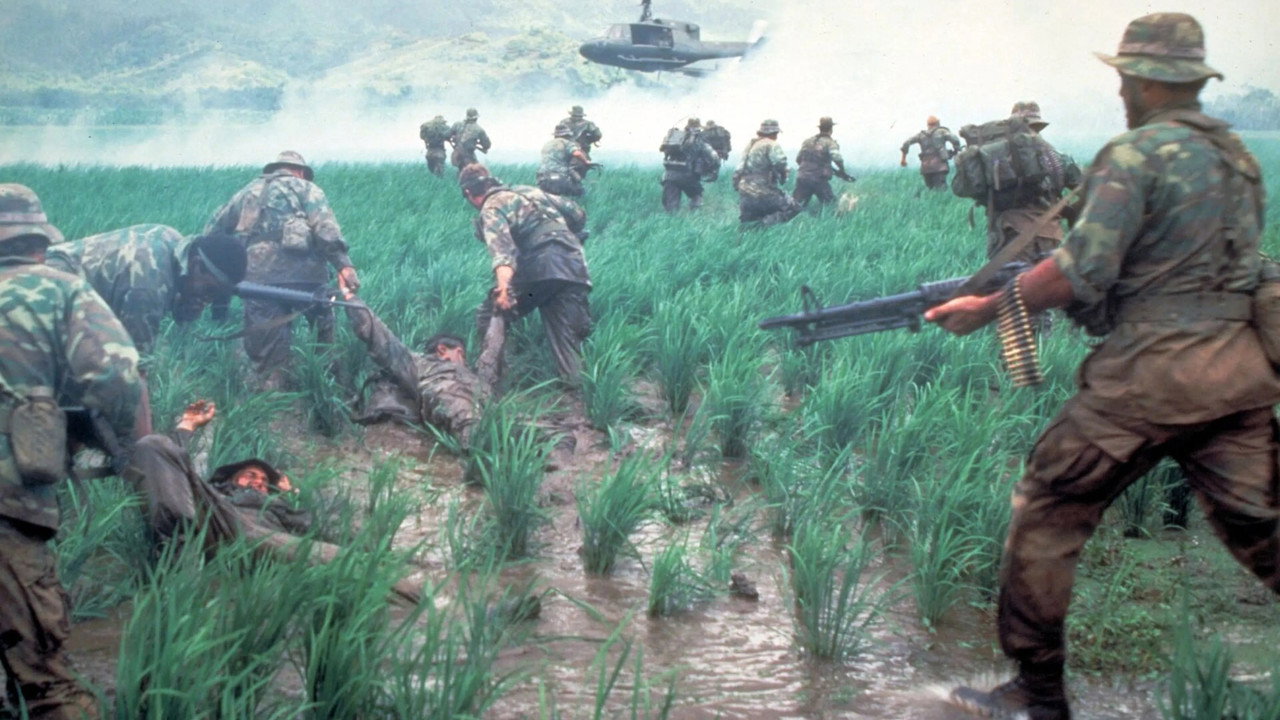

Diez años después de que su hijo fue declarado muerto, un coronel decide buscarlo. Algunas evidencias indican que él puede estar vivo. Con la ayuda de un magnate y de cinco infantes de marina se embarca en una misión de rescate en Vietnam.
Reparto

Gene Hackman
Col. Cal Rhodes

Fred Ward
Wilkes
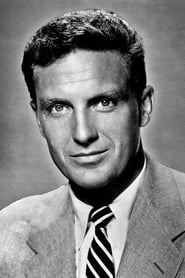
Robert Stack
MacGregor

Patrick Swayze
Kevin Scott

Harold Sylvester
Johnson

Randall 'Tex' Cobb
Sailor
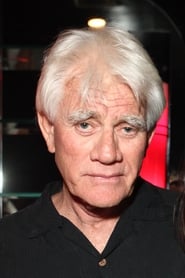
Tim Thomerson
Charts

劉雅麗
Lai Fun

Kwan Hi Lim
Jiang
Kelly Junkerman
Paul MacGregor

Todd Allen
Frank Rhodes

Gail Strickland
Helen Rhodes

Reb Brown
Blaster

Jane Kaczmarek
Mrs. Wilkes
Tráiler
Dónde ver
Alquiler
 Apple TV Store
 Amazon Video
Compra
Apple TV StoreAmazon VideoFicha técnica
- Título original
- Uncommon Valor
- Idiomas
- English
- Países
- United States of America
- Productoras
- Paramount Pictures
- Presupuesto
- USD 11,000,000
- Recaudación
- USD 30,503,151
Cifras en dólares, según TMDb.
Críticas
(CASTELLANO) Hay películas que solo se entienden del todo si las miras dentro de la época que las produjo. Esta es muy de 1983. Muy de un Hollywood que todavía estaba intentando digerir Vietnam, pero que empezaba a convertir la culpa, la derrota y el abandono en relatos de rescate, reparación y orgullo recuperado. Venía de la estela de Rambo, aunque aquí la cosa va por otro lado: no habla tanto del soldado que vuelve roto a casa como de los que nunca volvieron. Y esa idea, aunque la película después la trate de una forma bastante convencional, tiene fuerza. Porque detrás de todos los tiros, explosiones y frases patrióticas hay algo sencillo y doloroso: un padre que no acepta que su hijo haya quedado perdido en una guerra que su país preferiría olvidar. Gene Hackman sostiene la película mucho más de lo que quizá merecía el guion. Su personaje podría haber sido únicamente el militar obstinado que reúne a un grupo de hombres para una misión imposible, pero Hackman le da cansancio, dolor y una terquedad muy humana. No parece un superhéroe ni un loco de acción. Parece un hombre que lleva años viviendo con una ausencia y que necesita hacer algo, aunque ese algo sea absurdo, peligroso y casi suicida. Cada vez que la película se acerca a esa herida funciona mejor. No por la épica, sino por lo que hay debajo: la necesidad de creer que todavía se puede reparar algo cuando ya todo llega demasiado tarde. El grupo de rescate responde bastante al manual del cine de aventuras bélicas de la época. Cada uno tiene su rasgo, su trauma, su función dentro de la misión. Fred Ward, Patrick Swayze, Reb Brown, Randall "Tex" Cobb y compañía aportan presencia, pero tampoco estamos ante personajes especialmente profundos. La película los dibuja lo justo para que funcionen como equipo y para que entendamos ese código de camaradería que sostiene toda la historia. "No dejar a nadie atrás" es el verdadero motor de la película, aunque no siempre se desarrolle con demasiada sutileza. Hay algo noble en esa idea, incluso cuando el envoltorio resulta demasiado patriótico o demasiado simple. Ted Kotcheff dirige con eficacia, sobre todo cuando la película deja de preparar la misión y entra ya en terreno de acción. La parte inicial tiene entrenamiento, planificación, viejas cuentas pendientes y esa estructura tan conocida de "reunir al grupo", que se ve con cierta comodidad pero sin demasiadas sorpresas. Después, cuando llegan la selva, el campamento, la infiltración y los disparos, todo se vuelve más físico y más entretenido. La fotografía de Stephen Burum y Ric Waite ayuda a darle una textura más atractiva de lo que cabría esperar de una película tan de fórmula, y James Horner aporta esa música de aventura y emoción que empuja bastante el conjunto. No es una película elegante, pero sí sabe moverse dentro del cine que quiere ser. El problema es que la premisa daba para algo más incómodo y la película casi siempre elige el camino más fácil. Podía haber hablado con más hondura de la responsabilidad política, de la mentira, del abandono institucional o de cómo una guerra sigue pudriendo la vida de quienes sobrevivieron a ella. A ratos lo roza, pero enseguida vuelve a la aventura de rescate, al enemigo funcional y al heroísmo más reconocible. Se entiende: estamos en los ochenta y el público quería otra clase de catarsis. Pero vista hoy se notan mucho los clichés, el simplismo ideológico y cierta forma de convertir Vietnam en escenario para ajustar cuentas emocionales desde Estados Unidos. Eso no arruina la película, pero sí la limita. Aun así, no me parece despreciable. Tiene oficio, ritmo cuando arranca, un reparto con caras estupendas y un Gene Hackman que consigue darle peso a una historia que podría haber sido mucho más plana. No es la gran película sobre Vietnam ni sobre los desaparecidos; es más bien una película de acción patriótica, violenta, directa y bastante entretenida, con todos los defectos y atractivos de su época. La ves y sabes perfectamente por dónde va a ir. Pero también entiendes por qué funcionó: toca una herida real, la convierte en misión imposible y deja que el espectador fantasee con una reparación que la historia nunca concedió tan fácilmente. Cine de los ochenta en estado puro: tosco, emocional, discutible y eficaz. (ENGLISH) Some films can only be fully understood if you look at them within the era that produced them. This is very 1983. Very much a Hollywood still trying to digest Vietnam, but already beginning to turn guilt, defeat and abandonment into stories of rescue, repair and recovered pride. It came in the wake of Rambo, although this moves in a different direction: it is not so much about the soldier who comes home broken as about those who never came back. And that idea, even if the film later treats it in a fairly conventional way, has strength. Because behind all the gunfire, explosions and patriotic lines there is something simple and painful: a father who refuses to accept that his son was left behind in a war his country would rather forget. Gene Hackman carries the film far more than the script probably deserves. His character could have been just the stubborn military man who gathers a group of men for an impossible mission, but Hackman gives him exhaustion, grief and a very human stubbornness. He does not look like a superhero or an action madman. He looks like someone who has spent years living with an absence and needs to do something, even if that something is absurd, dangerous and almost suicidal. Whenever the film gets close to that wound, it works better. Not because of the epic element, but because of what lies underneath: the need to believe that something can still be repaired when everything is already far too late. The rescue team follows the manual of the war adventure cinema of the period quite closely. Each man has his trait, his trauma, his function within the mission. Fred Ward, Patrick Swayze, Reb Brown, Randall "Tex" Cobb and the rest bring presence, but these are not especially deep characters. The film draws them just enough for them to work as a team and for us to understand the code of comradeship that sustains the whole story. "Leave no man behind" is the real engine of the film, even if it is not always developed with much subtlety. There is something noble in that idea, even when the wrapping feels too patriotic or too simple. Ted Kotcheff directs efficiently, especially once the film stops preparing the mission and moves into action territory. The first stretch has training, planning, old debts and that very familiar "getting the team together" structure, which is easy enough to watch but offers few surprises. Later, when the jungle, the camp, the infiltration and the shooting arrive, everything becomes more physical and more entertaining. Stephen Burum and Ric Waite's cinematography gives it a more attractive texture than one might expect from such a formula film, and James Horner adds that adventure-and-emotion music that pushes the whole thing forward. It is not an elegant film, but it does know how to move within the kind of cinema it wants to be. The problem is that the premise had room for something more uncomfortable, and the film almost always chooses the easier road. It could have spoken more deeply about political responsibility, lies, institutional abandonment or the way a war keeps rotting the lives of those who survived it. At times it brushes against those ideas, but it quickly returns to the rescue adventure, the functional enemy and a more recognizable kind of heroism. It makes sense: this is the eighties, and audiences wanted another sort of catharsis. But seen today, the clichés, the ideological simplicity and the way Vietnam becomes a stage for American emotional payback are very noticeable. That does not ruin the film, but it does limit it. Even so, I do not find it worthless at all. It has craft, rhythm once it gets going, a cast full of great faces and a Gene Hackman who gives weight to a story that could have been much flatter. It is not the great film about Vietnam or about the missing; it is rather a patriotic, violent, direct and quite entertaining action film, with all the flaws and attractions of its period. You watch it and know perfectly well where it is going. But you also understand why it worked: it touches a real wound, turns it into an impossible mission and lets the audience imagine a kind of repair that history never granted so easily. Eighties cinema in its purest form: rough, emotional, debatable and effective.
Recomendadas

Perdido en acción 2
1985 · Película

Rolling Thunder
1977 · Película

El Francotirador
1978 · Película

Con todos los honores
2020 · Película

Perdido en acción
1984 · Película

Nacido el Cuatro de Julio
1989 · Película

Fuímos heroes
2002 · Película

Con la frente en alto
2004 · Película

5 Sangres
2020 · Película

Pecados de guerra
1989 · Película

Billy Lynn: Honor y sentimiento
2016 · Película

Jacknife
1989 · Película
Danger Close: The Battle of Long Tan
2019 · Película
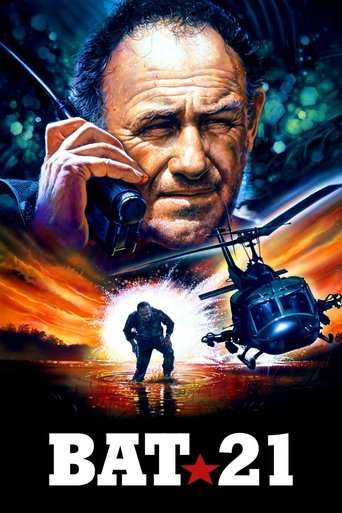
Bat 21
1988 · Película
Similares

Viaje a las estrellas V: La última frontera
1989 · Película

Die Ungewollten – Die Irrfahrt der St. Louis
2019 · Película

El Sexto Sentido
1999 · Película

El Último Samurái
2003 · Película

El Padrino
1972 · Película

El rey pescador
1991 · Película

Cuando los Hermanos se Encuentran
1988 · Película

Truman Capote
2005 · Película

21 gramos
2003 · Película

Ghettokids - Brüder ohne Heimat
2002 · Película

Baby Udon
2026 · Película

Můj příběh
2019 · Película

Apple Mortgage Cake
2014 · Película

The Girl Who Wore Freedom
2021 · Película