
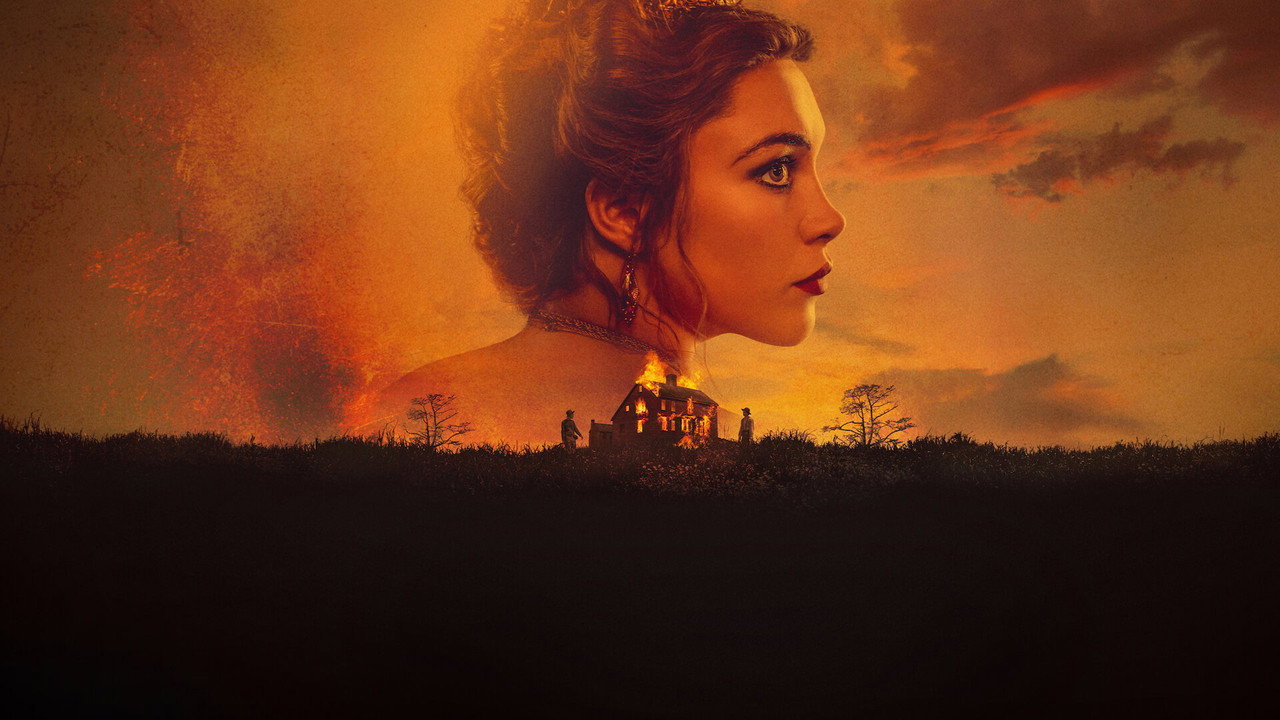
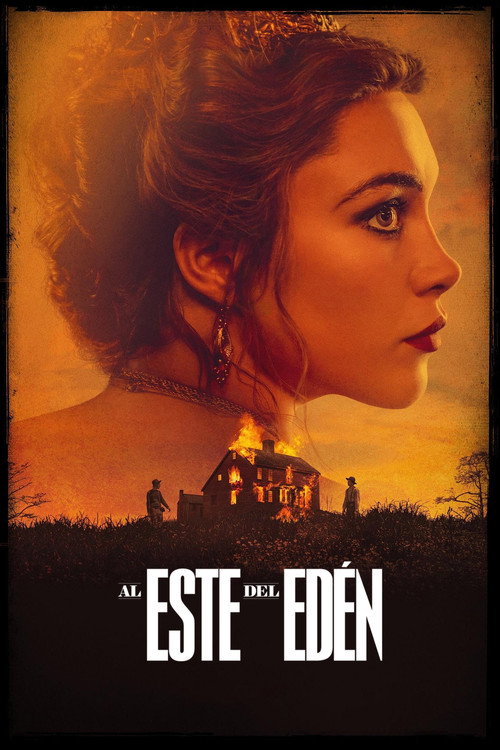
A principios del siglo XX, una mujer fuerte e independiente abre una brecha entre dos hermanos... y marca el comienzo de una saga que se extenderá a la siguiente generación.
Reparto



Tráiler
Temporadas
1 temporadas · 7 episodios · Netflix
Dónde ver
Suscripción
 Netflix
 Netflix Standard with Ads
Ficha técnica
- Título original
- East of Eden
- Idiomas
- English
- Países
- United States of America
- Productoras
- Fifth Season| Anonymous Content| Collab
- En producción
- No
- Formato
- Miniseries
Críticas
(CASTELLANO) Pocas historias familiares consiguen sentirse al mismo tiempo íntimas y enormes. Al este del Edén lo hace porque no habla solo de padres, hijos y hermanos, sino de algo más incómodo: hasta qué punto heredamos las heridas de quienes vinieron antes y hasta qué punto podemos elegir no repetirlas. La serie funciona especialmente bien cuando convierte la rivalidad entre hermanos en algo más complejo que “bueno” contra “malo”. Desde Adam y Charles hasta la siguiente generación, la sombra de Caín y Abel está siempre presente, pero los personajes no se reducen a símbolos. Quieren ser queridos, reconocidos y elegidos, y muchas de sus peores decisiones nacen precisamente de esa necesidad. Adam me interesa mucho porque intenta ser un padre distinto al que tuvo. Quiere ofrecer afecto donde él recibió dureza, pero la serie también muestra que querer hacerlo mejor no significa saber hacerlo siempre bien. Puede ser generoso y cariñoso, pero también ciego ante lo que ocurre delante de él. Ahí la historia resulta especialmente humana: romper una herencia familiar es posible, pero no automático. Cal es quizá quien mejor concentra esa tensión. Vive pendiente de cómo lo miran los demás y de si lo consideran digno de amor. La serie entiende lo peligroso que puede ser crecer sintiendo que tu hermano representa todo lo que los demás esperan de ti y tú encarnas aquello que preferirían no ver. Su conflicto no está en ser “malo”, sino en temer que quizá lo sea. Aron representa la necesidad de creer en una versión limpia y ordenada del mundo. Por eso la relación entre ambos hermanos resulta tan dolorosa. Ninguno cabe del todo en la etiqueta que la familia parece asignarle, y la serie acierta cuando permite que ambos sean egoístas, vulnerables, nobles o crueles dependiendo del momento. Abra me ha encantado. Aporta luz sin ser ingenua. Tiene dulzura, una sonrisa cálida y una capacidad poco común para ver lo que los demás intentan esconder. Su empatía funciona porque no idealiza: entiende que una persona puede tener zonas oscuras sin quedar definida únicamente por ellas. Lee, sin embargo, es para mí el gran personaje de la serie. Es quien parece comprender de verdad lo que ocurre dentro de la familia Trask. Observa antes de hablar, conoce las contradicciones de cada uno y posee una lucidez que nunca se convierte en superioridad moral. En una historia llena de gente que confunde amor con posesión, bondad con pureza o autoridad con razón, Lee es quien mejor entiende que las personas son mucho más complicadas. Y luego está Cathy. Florence Pugh consigue que resulte fascinante incluso cuando el personaje me parece absolutamente odioso. Es manipuladora, fría y capaz de detectar rápidamente la debilidad ajena. Lo más inquietante no es solo que haga daño, sino la facilidad con la que convierte a otras personas en herramientas. La serie intenta darle más humanidad que la imagen casi demoníaca que a veces desprende la novela, pero nunca necesita convertir esa humanidad en absolución. Visualmente, la serie está a la altura: paisajes, casas y campos tienen textura de gran novela clásica sin caer demasiado en la sensación de museo. La fotografía acompaña bien la amplitud del valle y la intimidad de las habitaciones. También agradezco que disponga del tiempo que la película de 1955 no tenía. Aquella versión concentraba su fuerza en una parte concreta de la novela; aquí podemos entender de dónde vienen los conflictos y comprobar cómo una generación deja marcas que reaparecen transformadas en la siguiente. Eso no elimina del todo el problema que siempre he tenido con Steinbeck. Su universo puede ser solemne y la historia se toma su tiempo. A veces el peso simbólico se nota demasiado y el paralelismo bíblico parece querer recordarnos constantemente su importancia. Pero en televisión ese ritmo me ha resultado mucho más llevadero que cuando leí la novela en el instituto. La gran idea es la libertad de elegir. La sangre, la educación y el pasado importan, pero no constituyen una condena automática. La serie plantea si estamos obligados a repetir a nuestros padres, si un hijo rechazado está destinado a convertirse en aquello que temen de él o si una persona puede decidir qué hacer con lo que ha heredado. Al este del Edén me ha hecho reconectar con una historia que recordaba como enorme, importante y también bastante pesada. Esta vez he entrado mucho más por los personajes. He disfrutado de su complejidad, he detestado a Cathy, me ha encantado Abra y, sobre todo, me llevo a Lee, uno de esos secundarios que terminan convirtiéndose en el verdadero centro moral de una historia. No es una adaptación perfecta ni convierte a Steinbeck en un autor ligero, pero sí consigue algo más importante: hacer que una tragedia familiar escrita hace décadas vuelva a sentirse viva. Debajo de toda la simbología bíblica sigue existiendo una pregunta muy sencilla: cuánto daño heredamos y cuánto de ese daño estamos dispuestos a dejar de transmitir. (ENGLISH) Few family sagas manage to feel intimate and enormous at the same time. East of Eden does because it is not only about parents, children and brothers, but about something more uncomfortable: how much of the damage from previous generations we inherit, and how much freedom we have not to repeat it. The series is especially strong when it turns sibling rivalry into something more complicated than “good” against “bad.” From Adam and Charles to the next generation, the shadow of Cain and Abel is always present, but the characters never become mere symbols. They want to be loved, recognized and chosen, and many of their worst decisions grow out of that need. Adam interests me because he genuinely tries to be a different father from the one he had. He wants to offer affection where he received hardness, yet the series also understands that wanting to do better does not mean always knowing how. He can be generous and loving, but also blind to what is happening directly in front of him. Breaking a family pattern is possible, but never automatic. Cal perhaps embodies that tension most clearly. He is constantly aware of how others see him and whether they consider him worthy of love. The series understands how dangerous it is to grow up feeling that your brother represents everything people hope for while you embody what they would rather not see. His conflict is not simply that he is “bad,” but that he fears he might be. Aron represents the need to believe in a clean, orderly version of the world. That is why the relationship between the brothers becomes so painful. Neither fully fits the role the family seems to assign him, and the series is at its best when it allows both to be selfish, vulnerable, noble or cruel depending on the moment. I loved Abra. She brings light without being naive. She has warmth, an open smile and a rare ability to see what other people are trying to hide. Her empathy works because she does not idealize anyone: she understands that a person can have dark corners without being defined entirely by them. Lee, however, is the great character of the series for me. He seems to understand what is really happening inside the Trask family. He watches before speaking, recognizes everyone’s contradictions and possesses a wisdom that never turns into moral superiority. In a story full of people who confuse love with possession, goodness with purity or authority with being right, Lee understands better than anyone that people are much more complicated. And then there is Cathy. Florence Pugh makes her fascinating even when I find the character absolutely hateful. She is manipulative, cold and frighteningly quick at identifying other people’s weaknesses. What disturbs me most is not simply that she hurts people, but how easily she turns them into tools. The adaptation gives her more humanity without asking us to confuse understanding with absolution. Visually, the series matches its ambition. The landscapes, houses and fields have the texture of a great classical novel without feeling embalmed in prestige-drama respectability. The photography handles both the openness of the valley and the intimacy of the rooms where relationships are shaped. I also appreciate that television gives this story the time the 1955 film did not have. That adaptation concentrated its power on one section of the novel; this one can show where the conflicts come from and how one generation leaves marks that return, transformed, in the next. That does not completely remove the problem I have always had with Steinbeck. His world can be solemn, and the story takes its time. At moments the symbolism becomes too visible, and the biblical parallel seems determined to remind us of its importance. Yet in this format I found the pace far easier to enter than when I read the novel at school. The central idea remains freedom of choice. Blood, upbringing and the past matter, but they are not an automatic sentence. The series repeatedly asks whether we must repeat our parents, whether a rejected child is destined to become what others fear in him, or whether a person can decide what to do with what has been inherited. East of Eden made me reconnect with a story I remembered as huge, important and also rather heavy. This time I entered through the characters. I enjoyed their contradictions, hated Cathy, loved Abra and, above all, came away admiring Lee, one of those supporting characters who quietly becomes the moral center of an entire story. It is not a perfect adaptation and it does not suddenly make Steinbeck lightweight, but it achieves something more valuable: it makes a decades-old family tragedy feel alive again. Beneath all the biblical symbolism remains a simple question: how much damage do we inherit, and how much of it are we willing to stop passing on?
Recomendadas

Mildred Pierce
2011 · Serie

Un lugar para soñar
2019 · Serie

La Casa de los Espiritus
2026 · Serie
Knots Landing
1979 · Serie

El baile de las luciérnagas
2021 · Serie

This Is Us
2016 · Serie

Mi vida con los chicos Walter
2023 · Serie
Julia
2022 · Serie

La novia
2025 · Serie

Dulces magnolias
2020 · Serie

Rivales
2024 · Serie
Hermanos Rebeldes
2003 · Serie

El mapa de los anhelos
2026 · Serie

El verano en que me enamoré
2022 · Serie
Similares

You are my fateful love
2026 · Serie

Ivanhoe
1997 · Serie

我的美女老师
2015 · Serie

Talk to Me
2007 · Serie

Madres felices y fatales
2023 · Serie

Sapai Jao Sua - Nuera en Guerra
2021 · Serie

主角
2026 · Serie

Colette, une femme libre
2004 · Serie

Operación Tyrant
2024 · Serie
The Boys from Brazil
— · Serie

Z: El comienzo de todo
2015 · Serie

Malaterra
2015 · Serie
22.11.63
2016 · Serie

暗影侦探
2025 · Serie