


Serie · 1984
V: La batalla final
Creación: Richard T. Heffron
Un pequeño grupo de luchadores de la resistencia humana libran una guerra de guerrillas desesperada contra los extraterrestres genocidas que dominan la Tierra.
Reparto

Jane Badler
Diana

Michael Durrell
Robert Maxwell

Robert Englund
Willie

Faye Grant
Julie Parrish

Richard Herd
John

Thomas Hill
Father Andrew Doyle
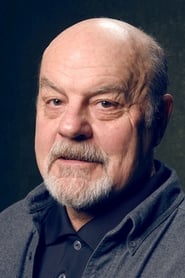
Michael Ironside
Ham Tyler

Peter Nelson
Brian
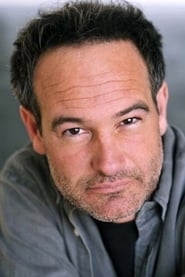
David Packer
Daniel Bernstein

Neva Patterson
Eleanor Dupres

Andrew Prine
Steven
Sandy Simpson
Mark

Marc Singer
Mike Donovan

Michael Wright
Elias Taylor
Temporadas
1 temporadas · 3 episodios · NBC
Dónde ver
Compra
 Google Play Movies
Ficha técnica
- Título original
- V: The Final Battle
- Idiomas
- Español, English
- Países
- United States of America
- Productoras
- Warner Bros. Television| Blatt-Singer Productions
- En producción
- No
- Formato
- Miniseries
Críticas
(CASTELLANO) Si *V* era la invasión, *V: La batalla final* era la guerra. La miniserie original tenía algo más inquietante. Los Visitantes llegaban sonriendo, manipulaban, prometían amistad y poco a poco descubríamos lo que había detrás. Aquí ya sabemos quiénes son. Se acabó fingir. Y toca luchar. Por eso *La batalla final* es más directa, más grande, más ruidosa y bastante más excesiva. Hay más tiroteos, más incursiones en las naves, más enfrentamientos y más efectos. La resistencia tiene que pasar de esconderse a intentar realmente liberar la Tierra. Y esa evolución siempre me ha encantado. Se pierde parte del misterio de la primera miniserie y también parte de su fuerza política. Ya no estamos descubriendo una ocupación: estamos viendo una guerra. Pero qué guerra. Michael Ironside aparece como Ham Tyler y parece haber nacido para estar en *V*. Frío, práctico y cínico, introduce una mentalidad militar que cambia completamente la resistencia. Ya no basta con sobrevivir ni con contarle al mundo la verdad. Hay que ganar. Marc Singer sigue funcionando perfectamente como Donovan. Faye Grant mantiene a Julie como centro de la resistencia. Robert Englund continúa aportando humanidad con Willie. Y luego está Diana. Jane Badler. Si ya era fascinante antes, aquí abraza completamente su condición de gran villana televisiva. Manipula. Amenaza. Seduce. Traiciona. Y disfruta haciéndolo. Los efectos también aumentan en cantidad. Algunas explosiones muestran los años, se reutilizan planos y hay soluciones que hoy parecen bastante ingenuas. La facilidad con la que determinados personajes entran en lugares supuestamente protegidos también puede provocar alguna sonrisa. Me da igual. Nunca he visto *V* buscando un manual de estrategia militar ni un tratado de biología extraterrestre. La veo porque me sigue atrapando. Porque cuando empiezan las naves, las alarmas, los disparos y los uniformes rojos sigo entrando en ese mundo. Y para televisión de 1984 había espectáculo. Miniaturas. Maquillajes. Efectos ópticos. Decorados. Prótesis. Batallas. No todo funciona igual de bien, pero había ambición. Querían que aquello pareciera enorme. Para mí lo parecía. Y todavía lo parece. Ahora veo más claramente que *La batalla final* es menos sofisticada que *V*, pero emocionalmente puede ser incluso más satisfactoria. Porque llevábamos esperando la reacción. Los Visitantes habían ocupado la Tierra, manipulado, perseguido y obligado a la resistencia a vivir escondida. Ahora queríamos ver la respuesta. Y esta miniserie nos la da. Con todos sus excesos. Con todas sus ingenuidades. Con sus soluciones imposibles. Pero la da. Por eso nunca he podido separar realmente *V* de *La batalla final*. La primera construye el mundo. La segunda lo lleva hasta sus consecuencias. Una es ocupación. La otra es rebelión. Juntas forman para mí la verdadera historia original de *V*. Después llegaron más capítulos porque el fenómeno era demasiado grande para dejarlo terminar. Pero emocionalmente siempre he sentido que aquí estaba el final. ¿Tiene agujeros? Muchísimos. ¿Ha envejecido? Por supuesto. ¿Es menos inteligente políticamente que la miniserie de 1983? Sí. ¿Me importa? Muy poco. La he visto una barbaridad de veces y sigo disfrutándola. Porque *La batalla final* no necesita volver a explicarme por qué había que resistir. Eso ya lo hizo *V*. Ahora solo tenía que dejar que comenzara la batalla. Y todavía me encanta verla. (ENGLISH) If *V* was the invasion, *V: The Final Battle* was the war. The original miniseries was more unsettling. The Visitors arrived smiling, manipulated people, promised friendship and gradually revealed what was underneath. Here, we already know who they are. The pretending is over. Now it is time to fight. That makes *The Final Battle* more direct, bigger, louder and considerably more excessive. There are more shootouts, more missions inside the ships, more confrontations and more effects. The Resistance has to move beyond hiding and actually try to free the Earth. I have always loved that progression. Some of the mystery of the first miniseries disappears, along with some of its political weight. We are no longer discovering an occupation. We are watching a war. But what a war. Michael Ironside arrives as Ham Tyler and seems born to be in *V*. Cold, practical and cynical, he brings a military mentality that changes the Resistance completely. Surviving and exposing the truth are no longer enough. They have to win. Marc Singer still works perfectly as Donovan. Faye Grant keeps Julie at the center of the Resistance. Robert Englund continues to bring humanity through Willie. And then there is Diana. Jane Badler. If she was already fascinating before, here she fully embraces being one of television's great villains. She manipulates. Threatens. Seduces. Betrays. And enjoys doing it. There are also more effects. Some explosions show their age, shots are reused and certain solutions now feel wonderfully naive. The ease with which characters enter supposedly secure areas can also be amusing. I do not care. I have never watched *V* looking for a military strategy manual or a serious treatise on alien biology. I watch because it still pulls me in. Because once the ships, alarms, gunfire and red uniforms appear, I am immediately back inside that world. And for television in 1984, there was a lot of spectacle. Miniatures. Makeup. Optical effects. Sets. Prosthetics. Battles. Not everything works equally well, but there was ambition. They wanted it to feel enormous. To me, it did. It still does. I now understand more clearly that *The Final Battle* is less sophisticated than *V*, but emotionally it may be even more satisfying. Because we had been waiting for the response. The Visitors had occupied Earth, manipulated people, persecuted them and forced the Resistance underground. Now we wanted to see people fight back. This miniseries gives us that. With all its excess. All its naivety. All its impossible solutions. But it gives us the payoff. That is why I have never really been able to separate *V* from *The Final Battle*. The first builds the world. The second takes it to its consequences. One is occupation. The other is rebellion. Together, for me, they form the true original story of *V*. More episodes came later because the phenomenon had become too successful to stop. But emotionally, this has always felt like the ending. Does it have plot holes? Plenty. Has it aged? Of course. Is it less politically intelligent than the 1983 miniseries? Yes. Do I care? Very little. I have watched it countless times and still love it. Because *The Final Battle* no longer needs to explain why resistance matters. *V* already did that. Now it only had to let the battle begin. And I still love watching it.
Recomendadas

V: Invasión extraterrestre
1984 · Serie

Invasión extraterrestre
2009 · Serie
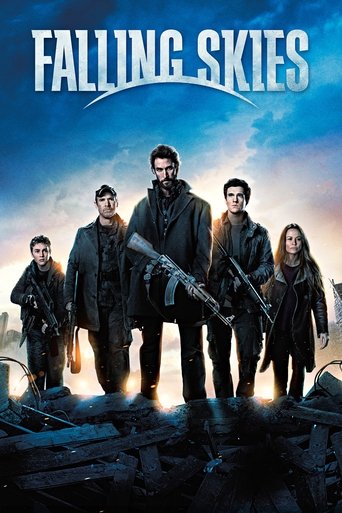
Falling Skies
2011 · Serie

Invasión
2021 · Serie
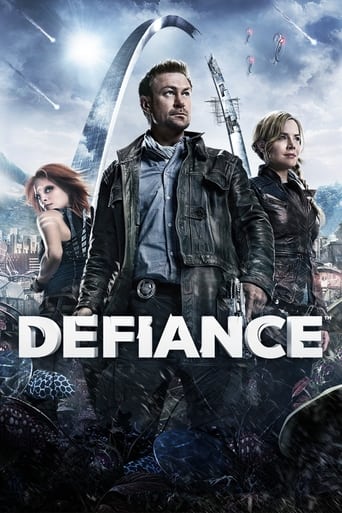
Defiance
2013 · Serie

First Wave
1998 · Serie

The War Between the Land and the Sea
2025 · Serie

Guerra de los Mundos
2019 · Serie

Invasión secreta
2023 · Serie

Halo
2022 · Serie
Krypton
2018 · Serie
Star Trek: Discovery
2017 · Serie

Alien: Earth
2025 · Serie

La Isla de la Fantasía
2021 · Serie
Similares
マグマ大使
1993 · Serie

Superheroes: A Never-Ending Battle
2013 · Serie
The Edwardians
1972 · Serie

Dandelion Dead
1994 · Serie
Blind Faith
1990 · Serie
مردان آنجلس
1997 · Serie

Fatal Vision
1984 · Serie
The Sarah Jane Adventures
2007 · Serie
Duck Dodgers
2003 · Serie

Misterios sin Resolver
1988 · Serie

Number 10
1983 · Serie
El tren de las 7:39
2014 · Serie

ケロロ 〜keroro〜
2014 · Serie
Island at War
2004 · Serie